
Nothing Phone 4a Pro Review: The Mid-Range Phone That Refuses to Be Boring
Nothing's Phone 4a Pro combines a Snapdragon 7 Gen 4 chip, 137-LED Glyph Matrix, and a stunning 6.83-inch 144Hz AMOLED display for just $499. After two weeks of daily use, here is whether it delivers on its ambitious promise.
A
admin
April 8, 2026 · 13 min read
Review8.5/10
Overall Score
8.5
out of 10Design
9.5
Display
9
Performance
8
Camera
8
Value
9
Two Weeks With Nothing's Best Mid-Ranger
Nothing has never been a company content with blending in. From the transparent backs of the Phone 1 to the divisive Glyph Interface, Carl Pei's brand has consistently prioritized personality over convention. The Nothing Phone 4a Pro is the latest expression of that philosophy, and it might be the most compelling one yet. At $499, it packages a Snapdragon 7 Gen 4 chipset, a massive 6.83-inch 144Hz AMOLED panel, the most advanced Glyph Matrix to date, and a triple camera system with 3.5x optical zoom into an aluminum unibody chassis that feels like it should cost significantly more.
We have been using the Nothing Phone 4a Pro as a daily driver for two weeks. This review covers everything from build quality and display performance to camera output and battery endurance, based on sustained real-world use rather than a quick hands-on session.
Buy Nothing Phone 4a Pro on Amazon
Design and Glyph Matrix: Finally, Substance Behind the Style
Build Quality
The first thing you notice when picking up the Nothing Phone 4a Pro is the weight and the material. This is an aluminum unibody design, a construction method that has become rare in the smartphone world due to the complexities it introduces for wireless connectivity and thermal management. Nothing has made it work, and the result is a phone that feels genuinely premium in hand.
The device measures in at a manageable profile despite its large 6.83-inch display. It is not a small phone by any means, but Nothing has kept the bezels tight enough that the overall footprint remains pocketable. The flat edges provide a secure grip, and the matte aluminum finish resists fingerprints far better than glass-backed alternatives.
Build quality is excellent throughout. There is no flex, no creaking, and no uneven panel gaps. The buttons have a satisfying click with minimal travel, and the SIM tray sits flush with the frame. At $499, this build quality is exceptional and puts pressure on phones that cost $200 to $300 more.
Glyph Matrix
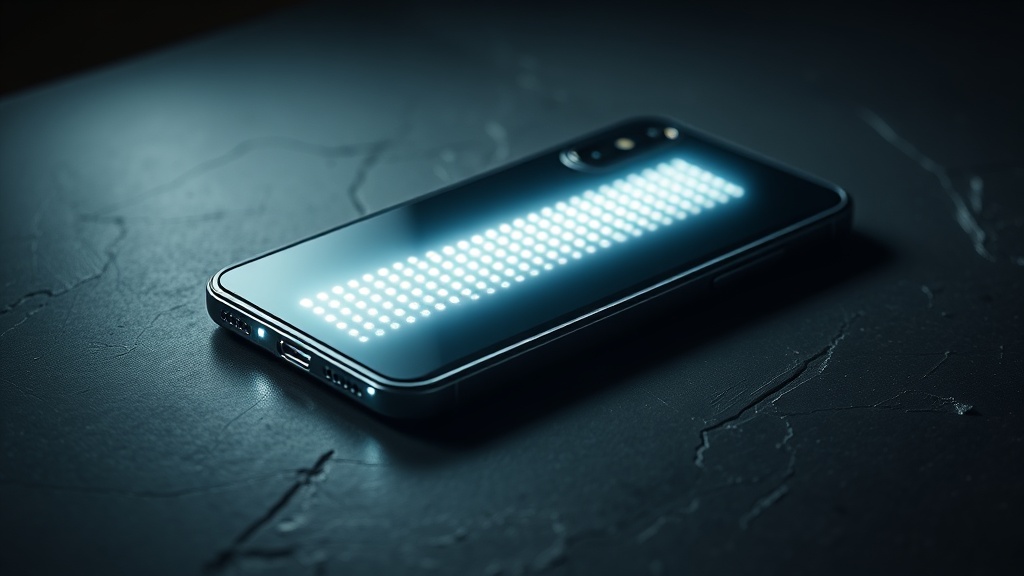
The Glyph Matrix on the Phone 4a Pro represents the most significant evolution of Nothing's LED notification system. The rear panel houses 137 individual mini-LEDs arranged in a grid pattern that can display pixel-style icons, animations, and notification indicators. This is a substantial step beyond the simple light strips of previous Nothing phones.
In practice, the Glyph Matrix is more useful than we expected. We assigned custom Glyph patterns to our most frequent contacts, allowing us to identify callers without flipping the phone over or glancing at the screen. The system also displays countdown timers, music visualizations, and delivery tracking progress. Nothing has opened the Glyph API to third-party developers, and the ecosystem of supported apps is growing steadily.
The brightness of the LEDs is well-calibrated. They are visible in direct sunlight when needed, but they dim automatically in dark environments to avoid being distracting. The animations are smooth and surprisingly detailed for a grid of 137 points. Nothing has clearly invested significant engineering effort here, and it shows.
Is the Glyph Matrix essential? No. But it adds a layer of functionality and personality that no other phone offers, and at this price, it is a differentiator rather than a luxury tax.
Display: Flagship Brightness at a Mid-Range Price
The Nothing Phone 4a Pro sports a 6.83-inch AMOLED panel with a resolution of 2800 x 1260 pixels, a 144Hz refresh rate, and a claimed peak brightness of 5,000 nits. Those specifications read like a flagship spec sheet, and in practice, the display delivers accordingly.
Outdoor visibility is outstanding. We used the phone extensively in bright afternoon sunlight, and the screen remained perfectly legible at all times. The auto-brightness algorithm is responsive and generally accurate, though it occasionally overshoots when moving between indoor and outdoor environments. Manual brightness control is always available via the quick settings slider.
The 144Hz refresh rate provides noticeably smoother scrolling compared to 120Hz panels, though the difference is subtle enough that most users would struggle to identify it in a blind test. More important is the LTPO implementation, which allows the refresh rate to drop as low as 1Hz for static content, preserving battery life without sacrificing smoothness when it matters.
Color accuracy in the default display mode is good, with a slight warmth that flatters most content. Nothing provides a manual color temperature adjustment and the ability to switch between sRGB, DCI-P3, and Vivid profiles. The Vivid profile adds saturation that some users will love for social media browsing and video consumption. We preferred the default setting for its balanced reproduction.
HDR10+ content looks excellent on this panel. We watched several HDR titles on Netflix and YouTube, and the combination of high peak brightness and deep AMOLED blacks produced punchy, dynamic images with impressive contrast. For a $499 phone, this display experience rivals devices that cost twice as much.
Buy Nothing Phone 4a Pro on Amazon
Performance: Snapdragon 7 Gen 4 Delivers Where It Counts
The Nothing Phone 4a Pro is powered by Qualcomm's Snapdragon 7 Gen 4, built on a 4nm process and clocked at up to 2.6GHz. It is paired with either 8GB or 12GB of LPDDR5X RAM and 128GB or 256GB of UFS 4.0 storage. Our review unit shipped with 12GB of RAM and 256GB of storage.
In daily use, the Snapdragon 7 Gen 4 is more than adequate. App launches are quick, multitasking between messaging apps, browsers, and media players is seamless, and the interface never stutters or drops frames during normal navigation. Nothing OS 4.1 is well-optimized for this chipset, and the overall experience feels snappy and responsive.
Gaming performance is where the mid-range reality becomes apparent. Lighter titles like Subway Surfers and Candy Crush run without any issues whatsoever. More demanding games like Genshin Impact are playable at medium settings with stable frame rates, but pushing to high or maximum settings introduces noticeable frame drops and thermal throttling after extended sessions. This is expected behavior for a Snapdragon 7-series chip, and it is not a meaningful drawback for most users. If you are a hardcore mobile gamer who insists on maximum settings, you need a flagship chipset.
Thermal management is handled well. During sustained use, the aluminum chassis distributes heat evenly, and the phone never becomes uncomfortably hot. The warmest point during our stress testing was on the upper rear panel, and it remained well within acceptable limits.
Storage speeds are excellent thanks to UFS 4.0, with app installations and large file transfers completing quickly. The 12GB RAM configuration handles background app retention effectively, with apps remaining in memory reliably throughout a full day of varied use.
Camera: A Triple System With Clear Strengths
The camera array on the Nothing Phone 4a Pro consists of three rear sensors:
- 50MP main camera (Sony LYT-700C) with f/1.88 aperture and OIS
- 50MP telephoto with 3.5x optical zoom and up to 70x ultra-zoom
- 8MP ultrawide camera
Daylight Performance
The main 50MP sensor produces consistently good results in well-lit conditions. Detail is strong, dynamic range is handled well, and color reproduction leans slightly warm without crossing into unrealistic territory. The Sony LYT-700C sensor is a capable unit, and Nothing's processing pipeline does a commendable job of extracting its potential.
We were particularly impressed by the telephoto lens. A 3.5x optical zoom on a $499 phone is a significant offering, and the 50MP sensor behind it captures sharp, detailed images at its native focal length. The zoom is useful for everything from capturing architectural details to isolating subjects in street photography. Digital zoom beyond 3.5x degrades progressively, and the 70x ultra-zoom claim is essentially marketing. At 10x, images are still usable. Beyond 20x, they are soft and noisy.
Low-Light Photography
Low-light performance from the main sensor is respectable but not exceptional. The f/1.88 aperture collects adequate light, and the OIS helps maintain sharpness at slower shutter speeds. Night Mode extends exposure and stacks frames, producing cleaner results in dim environments, though the processing can occasionally over-smooth textures.
The telephoto struggles more in low light, which is expected given the narrower aperture and longer focal length. It remains usable in moderately dim conditions but produces noisy results in genuinely dark scenes.
The Ultrawide Problem
The 8MP ultrawide is the weak link in the camera system. Resolution is noticeably lower than the other two sensors, and detail falls off significantly toward the edges of the frame. Color matching with the main sensor is adequate but not seamless. For casual landscape shots and group photos, it gets the job done. For anything requiring detail or accuracy, it falls short.
This is the clearest area where the $499 price point makes itself felt. A higher-resolution ultrawide sensor would elevate the entire camera experience.
Video
Video recording tops out at 4K at 30fps from the main sensor, with 1080p available at up to 60fps. Stabilization is effective, producing smooth footage during walking shots. Audio capture is clean and directional. For social media content and casual videography, the Phone 4a Pro is a capable tool.
Battery Life: All-Day and Then Some
The Nothing Phone 4a Pro houses a 5,080mAh battery that delivers outstanding endurance. In our testing, the phone consistently lasted a full day of heavy use with 25 to 30 percent remaining by bedtime. Moderate users will comfortably stretch to a day and a half.
Our typical usage pattern included four to five hours of screen time across social media, messaging, web browsing, and media consumption, along with background music streaming, GPS navigation, and frequent camera use. The combination of the efficient Snapdragon 7 Gen 4 and the LTPO display management contributes to the strong battery performance.
Charging speeds are functional if unspectacular. The 50W wired charging fills the battery from empty to 50 percent in approximately 22 minutes and reaches 100 percent in about 64 minutes. These numbers are fine, but they trail faster-charging competitors from OnePlus and Xiaomi. There is no wireless charging, which is understandable at this price but still worth noting for users who have invested in wireless charging setups.
The phone also supports 7.5W reverse wired charging, allowing you to top up accessories like wireless earbuds in a pinch.
Buy Nothing Phone 4a Pro on Amazon
Software: Nothing OS 4.1 on Android 16
The Nothing Phone 4a Pro ships with Nothing OS 4.1, built on Android 16. Nothing's software philosophy has always been about adding useful features on top of a clean Android base without burying the user in bloatware or redundant apps, and that approach continues here.
The interface is clean and visually distinctive. Nothing's custom iconography, dot-matrix fonts, and monochromatic widget designs give the phone a unique identity that extends the hardware design language into the software layer. It is cohesive and intentional, and it sets the Phone 4a Pro apart from the sea of One UI and MIUI devices.
Glyph integration is deeper in Nothing OS 4.1 than in previous versions. You can customize Glyph patterns for individual contacts, apps, and notification categories. The Glyph Composer tool allows you to create custom light patterns set to music, which is more fun than practical but demonstrates the creative potential of the system.
Nothing has committed to three years of OS updates and four years of security patches. This is a reasonable commitment for a $499 phone, though it falls short of the seven-year promises from Samsung and Google on their flagship devices. It means the Phone 4a Pro will receive Android 17 and Android 18, with security updates extending to 2030.
There are minor software inconsistencies. Some third-party apps do not fully conform to Nothing's visual language, creating occasional jarring transitions between Nothing's carefully designed interface and standard Android app layouts. This is a challenge every custom Android skin faces, and Nothing handles it better than most, but it is not invisible.
AI Features
Nothing has integrated a suite of AI features into Nothing OS 4.1, including Smart Drawer organization, AI-powered photo enhancement, and an on-device AI assistant that handles basic queries without requiring an internet connection. These features are functional and unobtrusive. They do not define the phone, but they add value without getting in the way.
Nothing Phone 4a Pro Verdict
The Nothing Phone 4a Pro is the most compelling mid-range phone we have tested in 2026. At $499, it delivers an aluminum build that feels premium, a Glyph Matrix system that has evolved from gimmick to genuinely useful tool, a display that rivals phones twice its price, and a camera system that punches above its weight in most scenarios.
The compromises are real but reasonable. The 8MP ultrawide camera is the weakest link. Charging speeds are adequate rather than fast. The software update commitment, while decent, does not match flagship-tier support. And gaming performance at maximum settings requires stepping up to a more powerful chipset.
But these are concessions that make sense at the price. The Nothing Phone 4a Pro does not try to be a flagship killer. It tries to be the best version of a $499 phone, and it succeeds convincingly. If you value design, display quality, and personality in your smartphone and do not want to spend $1,000 or more, this is the phone to buy.
What We Liked
- Glyph Matrix with 137 LEDs is genuinely useful and visually striking
- 6.83-inch 144Hz AMOLED with 5,000 nits peak brightness is flagship-grade
- Aluminum unibody build feels premium at every touch point
- Snapdragon 7 Gen 4 delivers smooth daily performance
- Exceptional value at $499 with flagship-adjacent features
What Could Improve
- 50W wired charging is adequate but trails faster-charging competitors
- 8MP ultrawide camera is noticeably weaker than the main and telephoto sensors
- No wireless charging at this price point
- Nothing OS 4.1 still has minor visual inconsistencies
The Verdict
The Nothing Phone 4a Pro is the most exciting mid-range phone of 2026. Its Glyph Matrix system is no longer a gimmick but a genuinely functional notification tool, the display punches well above its price class, and the aluminum unibody build makes $800 phones feel overpriced. The camera system is strong if imperfect, and performance handles everything short of sustained heavy gaming with ease. At $499, this is the mid-range phone to beat.
Was this article helpful?
Join the conversation — sign in to leave a comment and engage with other readers.
Loading comments...
Related Posts
smartphones
Samsung Galaxy S26 Ultra Review: The Best Android Phone of 2026?
Apr 4, 2026smartphones
Samsung Galaxy A57 Review: Best Mid-Range Phone of 2026?
Apr 4, 2026smartphones
Google Pixel 10a Review: The Best Budget Phone You Can Buy in 2026
Apr 4, 2026smartphones
Best Budget Smartphones Under $500 in 2026
Apr 8, 2026Enjoyed this article?
Get the best tech reviews, deals, and deep dives delivered to your inbox every week.