
Samsung Galaxy S26 Ultra Review: The Best Android Phone of 2026?
Samsung's latest flagship brings a 200 MP camera, Privacy Display, and 60W charging to its most refined Ultra yet. After three weeks of daily use, here is whether it earns the crown.
A
admin
April 4, 2026 · 12 min read
Review9/10
Overall Score
9
out of 10Camera
9.5
Display
9.5
Performance
9
Battery
8.5
Value
8
Three Weeks With Samsung's Flagship
Every year, Samsung drops an Ultra and dares the rest of the industry to keep up. The Galaxy S26 Ultra lands on familiar territory: a massive display, an absurd camera system, and a price tag that makes you pause at checkout. The question is never whether the S26 Ultra is a good phone. It obviously is. The question is whether it is meaningfully better than the phone it replaces, and whether it is worth what Samsung is asking.
I have been using the Galaxy S26 Ultra as my primary phone for three weeks. Not a weekend. Not a few days of staged photo comparisons. Three full weeks of calls, commutes, photo walks, gaming sessions, and travel. This review reflects sustained, real-world use.
Design and Build: Familiar, But Refined
If you put the S26 Ultra next to an S25 Ultra, most people would struggle to tell them apart at a glance. Samsung has made subtle refinements rather than a dramatic redesign, and honestly, that is fine. The S25 Ultra's design language was already mature, and there is no need to reinvent it.
The S26 Ultra measures 163.6 x 78.1 x 7.9 mm and weighs 214 grams. That is fractionally lighter than its predecessor, though the difference is not perceptible in hand. The titanium frame returns, providing structural rigidity without excessive weight, and the flat display edges continue the trend Samsung started with the S24 Ultra, abandoning the curved screens that divided opinion for years.
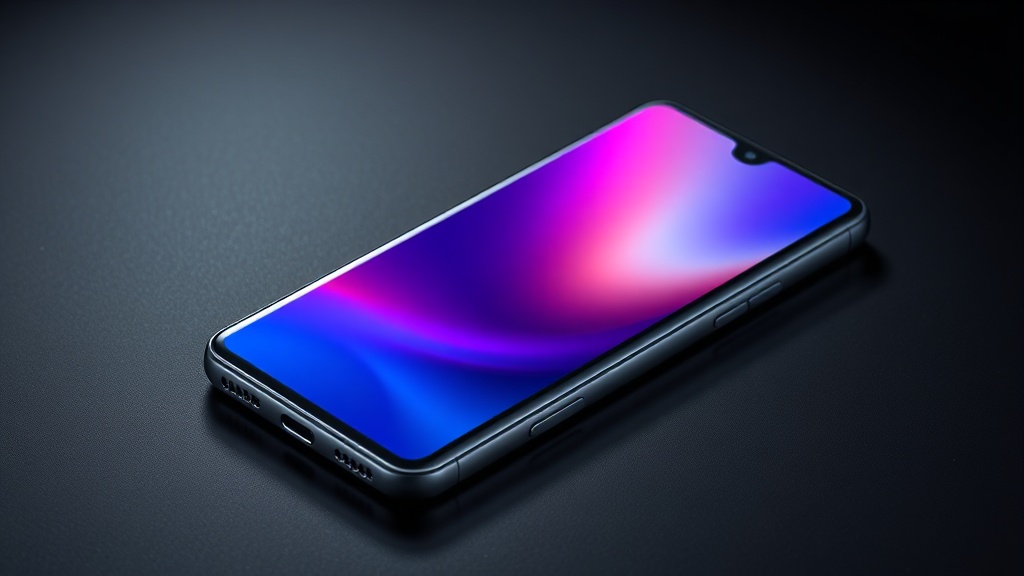
The phone is available in four colors: Black, Cobalt Violet, Sky Blue, and White. Samsung sent the Cobalt Violet for review, and it is genuinely attractive. The color shifts subtly depending on the light, moving between a deep purple and a metallic blue. It is understated enough for professional settings but distinctive enough to stand out in a lineup of black and silver phones.
Corning Gorilla Armor 2 covers the front display. Samsung claims improved scratch resistance over the first generation, and while I cannot quantify that claim after only three weeks, I can report zero visible scratches despite carrying the phone without a case for the majority of the review period. The rear glass also carries Gorilla protection, and the camera housing is flush enough to avoid the aggressive wobble that plagued earlier Ultra models when placed on flat surfaces.
The S Pen remains integrated into the bottom of the phone, and it functions identically to the S25 Ultra's implementation. If you use the S Pen, it is here and works well. If you do not, it stays out of the way. Samsung has not changed the formula, and it did not need to.
Display: The Best Screen on Any Phone
Samsung has made the best smartphone displays for years, and the S26 Ultra continues that dominance without breaking a sweat. The 6.9-inch Dynamic AMOLED 2X panel runs at QHD+ resolution (3,120 x 1,440 pixels) with an LTPO adaptive refresh rate that scales between 1 Hz and 120 Hz depending on content.
Peak brightness is rated at 3,000 nits, and in practice, outdoor visibility is exceptional. I used the phone extensively during a weekend trip to a sunny outdoor market, and I never struggled to read the screen. The auto-brightness algorithm is aggressive enough to hit maximum output when needed, and it scales back quickly when you move indoors, which helps with battery life.
Color accuracy is excellent in the Natural display mode, and the Vivid mode adds Samsung's characteristic punch without crossing into garish territory. Most users will leave it on Vivid and be perfectly happy.
Privacy Display
The headline display feature for the S26 Ultra is Privacy Display, and it is the first phone in the world to ship with this technology. When activated, Privacy Display reduces screen visibility from off-axis angles, effectively preventing people sitting next to you from reading your screen.
I tested this extensively on planes, trains, and in coffee shops. It works. At roughly 30 degrees off-center, the screen content becomes unreadable, appearing as a dark, distorted blur. Directly in front of the phone, the image remains sharp and clear, though brightness drops by approximately 15 to 20 percent when Privacy Display is active. This is a noticeable trade-off, but it is manageable, and you can toggle the feature on and off from the quick settings panel.
This is the kind of feature that sounds gimmicky on paper but proves immediately useful in practice. Checking banking apps on public transit, reviewing work documents in a crowded airport lounge, or simply texting without an audience: Privacy Display addresses a real problem that every smartphone user has encountered. Samsung deserves credit for shipping something genuinely novel here.
Camera: 200 Megapixels That Actually Matter
The camera system on the S26 Ultra consists of four rear sensors:
- 200 MP main camera with an f/1.4 aperture
- 50 MP ultrawide camera
- 10 MP telephoto with 3x optical zoom
- 50 MP periscope telephoto with 5x optical zoom
The 200 MP main sensor is the same resolution as the S24 Ultra and S25 Ultra, but Samsung has refined the processing pipeline substantially. The f/1.4 aperture, the widest on any major smartphone, allows more light to hit the sensor, which translates directly into better low-light performance.
Daylight Photography
In good lighting, the S26 Ultra produces images that are essentially flawless for a smartphone. Detail is extraordinary when shooting at the full 200 MP resolution, and the default 12 MP pixel-binned mode delivers files with excellent dynamic range, accurate color, and natural-looking HDR processing.
Samsung's processing has matured considerably over the past two generations. The oversharpening that once plagued Galaxy cameras is largely gone. Skin tones look natural, foliage is not over-saturated, and the sky retains realistic gradients rather than the painted-on look that aggressive HDR can produce.
Compared to the Pixel 10 Pro, which remains the other camera benchmark in Android, the S26 Ultra trades blows. The Pixel produces slightly more natural colors straight out of the camera, while the Samsung captures more detail and handles high-contrast scenes with greater nuance. Both are outstanding, and the gap between them is smaller than ever.
Low-Light and Night Mode
Low-light performance is where the f/1.4 aperture pays its biggest dividends. The S26 Ultra captures noticeably more light than the S25 Ultra in identical conditions, resulting in cleaner images with less noise and less reliance on computational processing to brighten shadows.
Night Mode is available but increasingly unnecessary. The standard photo mode handles dimly lit restaurants, street scenes, and indoor events with minimal noise. Night Mode adds value only in extremely dark conditions, where it extends exposure time and stacks frames for improved clarity. The results in these edge cases are impressive, producing usable images in conditions where the human eye struggles to see.
Zoom Performance
The dual telephoto setup provides both 3x and 5x optical zoom, with digital zoom extending to 100x. At 3x and 5x, image quality is excellent, with detail and color accuracy that rival the main sensor. At 10x, Samsung's computational processing does a commendable job of maintaining sharpness and contrast.
Beyond 10x, quality degrades progressively, as it does on every phone. At 30x, images are usable for identifying distant subjects but would not hold up to scrutiny at full size. At 100x Space Zoom, results are soft and noisy, best treated as a novelty rather than a serious photography tool. This has been true for every Ultra generation, and Samsung has wisely stopped emphasizing it in marketing.
Video
Video recording supports up to 8K at 30 fps and 4K at 60 fps with excellent stabilization. The stabilization system has improved noticeably over the S25 Ultra, particularly during walking shots. Footage is smooth without the jelly-like warping that aggressive electronic stabilization can introduce.
Audio capture is clean and directional, with the phone doing a good job of focusing on the subject in front of the camera and suppressing ambient noise. For social media content and casual videography, the S26 Ultra is more than sufficient.
Performance: Snapdragon 8 Elite Gen 5
The S26 Ultra is powered by Qualcomm's Snapdragon 8 Elite Gen 5, paired with 16 GB of RAM and up to 1 TB of storage. In practical terms, this phone is fast. Apps launch instantly, multitasking is seamless, and I never experienced a stutter or dropped frame during three weeks of use.
Benchmark numbers tell a predictable story: the Snapdragon 8 Elite Gen 5 is approximately 10 to 15 percent faster than the Snapdragon 8 Elite in single-core tasks and roughly 20 percent faster in multi-core workloads. In real-world use, this translates to imperceptibly faster app launch times and slightly snappier photo processing. If you are coming from an S25 Ultra, you will not feel a dramatic difference. If you are upgrading from an S23 or older, the improvement will be substantial.
Gaming performance is where the silicon flex matters most. I tested Genshin Impact at maximum settings for extended sessions, and the S26 Ultra maintained stable frame rates with minimal thermal throttling. The phone gets warm during sustained gaming, but it never becomes uncomfortable, and performance remains consistent even after 30 minutes of heavy load.
Samsung's One UI 7, built on Android 16, is the software layer here. It is Samsung's most refined interface to date, with cleaner animations, better notification management, and deeper integration with Galaxy AI features. Samsung promises seven years of OS updates and seven years of security patches, which means this phone will receive software support through 2033. That is an extraordinary commitment and one of the strongest arguments for investing in a premium Samsung device.
Galaxy AI
Samsung's AI features continue to expand. Circle to Search is faster and more accurate. Live Translate handles real-time conversation translation in 20 languages. Generative Edit in the gallery app allows sophisticated photo editing with natural language commands. These features are useful and well-implemented, though none of them alone justify an upgrade from the S25 Ultra.
The most practical AI addition is the improved call screening feature, which uses on-device AI to filter spam calls and provide real-time transcription of voicemails as they are being recorded. This alone has saved me from answering half a dozen robocalls during the review period.
Battery Life: Good, Not Great
The S26 Ultra packs a 5,000 mAh battery, which is standard for a phone this size. Battery life is good, consistently delivering a full day of mixed use with 15 to 25 percent remaining by bedtime. Screen-on time averages around 7 to 8 hours, depending on brightness and workload.
Heavy use days, defined as days with significant gaming, camera use, and navigation, drain the battery faster and occasionally required a top-up in the late afternoon. This is not unusual for a flagship phone with a 6.9-inch QHD+ display, but it does mean the S26 Ultra is not a two-day phone under any realistic usage pattern.
Charging
The big upgrade here is charging speed. The S26 Ultra supports 60W wired charging for the first time in the Ultra lineup, up from 45W on the S25 Ultra. In practice, this means:
- 0 to 50%: approximately 22 minutes
- 0 to 80%: approximately 38 minutes
- 0 to 100%: approximately 62 minutes
These are solid numbers, and the improvement over 45W is noticeable in daily use. A quick charge during a lunch break can add enough juice to get through the rest of the day comfortably.
Wireless charging tops out at 25W, which is adequate but not class-leading. Some competitors, notably OnePlus, offer 50W wireless charging. Samsung is playing it conservative here, likely prioritizing battery longevity over raw speed.
No charger is included in the box. At $1,299, this remains frustrating. Samsung sells its 65W charger separately for $34.99, and third-party options from Anker and others work fine with the appropriate PD protocol support.
Software and Updates
One UI 7 is Samsung's most polished software experience. The interface is clean without being sterile, and Samsung has finally tamed the notification shade, which no longer requires a PhD in menu navigation to customize. App drawers, folder management, and widget placement all work as expected.
Samsung DeX continues to evolve, and connecting the S26 Ultra to a monitor via USB-C provides a passable desktop experience for light productivity. It is not a laptop replacement, but it is useful for presentations, document editing, and web browsing when a full computer is not available.
The seven-year update commitment bears repeating because it fundamentally changes the value proposition of this phone. A $1,299 investment that receives meaningful software updates through 2033 amortizes to roughly $186 per year, which is competitive with mid-range phones that receive only two or three years of updates.
Storage and Connectivity
The S26 Ultra is available in 256 GB, 512 GB, and 1 TB configurations, priced at $1,299.99, $1,499.99, and $1,799.99 respectively. There is no microSD card slot, so choose your storage tier carefully. For most users, 256 GB is sufficient. Heavy photographers and videographers shooting in 8K should consider the 512 GB model at minimum.
Connectivity is comprehensive: Wi-Fi 7, Bluetooth 5.4, NFC, and 5G with mmWave support on all US models. The phone also supports satellite SOS for emergency communication in areas without cellular coverage, a feature that is increasingly standard on flagships and one that I hope to never need to use.
Who Should Buy the Galaxy S26 Ultra
The S26 Ultra is the phone for people who want the best Android has to offer and are willing to pay for it. It excels in every category, with the camera system and display standing out as genuinely best-in-class.
Upgrading from an S25 Ultra is harder to justify. The improvements, while real, are incremental. Privacy Display is the most compelling new feature, and whether that alone justifies a $1,299 purchase depends on your individual needs and financial situation.
Upgrading from an S24 Ultra or older is much easier to recommend. Two generations of camera improvements, the display upgrades, faster charging, and the refined software experience combine to make a meaningful difference.
If you are considering the S26 Ultra against the Pixel 10 Pro, the choice comes down to priorities. The Pixel offers a cleaner software experience and slightly better computational photography. The Samsung offers a more versatile camera system, a better display, and more features. Both are excellent. You cannot go wrong with either.
The Verdict
The Samsung Galaxy S26 Ultra is not a revolutionary phone. It is an evolutionary one, and that is perfectly fine. Samsung has taken an already excellent formula and refined it in ways that matter: faster charging, a genuinely innovative Privacy Display, improved camera processing, and the most powerful mobile processor available. The $1,299 price tag is the cost of entry for this level of excellence, and while it stings, the seven-year software commitment softens the blow considerably. This is the best Android phone you can buy in 2026.
What We Liked
- 200 MP main camera produces stunning detail in all lighting
- Privacy Display is a genuinely useful new feature
- 60W wired charging is a long-overdue upgrade
- Snapdragon 8 Elite Gen 5 delivers smooth, sustained performance
- 6.9-inch QHD+ display is the best panel on any phone
What Could Improve
- $1,299 starting price is steep and unchanged from last year
- Design is only incrementally different from the S25 Ultra
- 25W wireless charging still trails some competitors
- No included charger in the box at this price
The Verdict
The Samsung Galaxy S26 Ultra is the most complete Android phone you can buy in 2026. Its camera system is class-leading, the display is unmatched, and features like Privacy Display show Samsung is still innovating where it matters. The high price and iterative design are the only real knocks against it. If you want the best and are willing to pay for it, this is the phone to get.
Was this article helpful?
Join the conversation — sign in to leave a comment and engage with other readers.
Loading comments...
Related Posts
smartphones
Samsung Galaxy A57 Review: Best Mid-Range Phone of 2026?
Apr 4, 2026smartphones
Google Pixel 10a Review: The Best Budget Phone You Can Buy in 2026
Apr 4, 2026smartphones
Oppo Find X9 Ultra: The Camera Phone That Wants to Replace Your Mirrorless
Apr 5, 2026smartphones
Samsung Galaxy A57 Tips and Tricks: 20 Hidden Features You Need to Know
Apr 4, 2026Enjoyed this article?
Get the best tech reviews, deals, and deep dives delivered to your inbox every week.