
Apple Watch Ultra 3 Review: The Adventure Watch Catches Up to Garmin
Apple's Ultra 3 adds 5G, two-way satellite messaging, hypertension detection, and a 42-hour battery. After months of third-party testing data, here is whether it is finally the serious outdoor watch Garmin owners should worry about.
O
omer-yld
April 21, 2026 · 9 min read
Review9/10
Overall Score
9
out of 10Build & Titanium
9.5
Health Sensors
9
GPS Accuracy
8.5
Battery Life
8.5
watchOS Features
9.5
A Serious Adventure Watch, Finally
Apple does not usually rewrite the Ultra line. The Ultra 2 was a spec bump, and most of 2024 passed without a meaningful change to the adventure watch Tim Cook unveiled in 2022. The Apple Watch Ultra 3, released in November 2025 at $799, is the first refresh that materially narrows the gap to Garmin. A new LTPO3 display, 5G cellular, two-way satellite messaging, hypertension detection notifications, an overhauled sleep score, and a 42-hour battery on a single charge add up to the most meaningful Ultra update yet.
We have not strapped one to a wrist for a 100-mile ultra. What we have done is read every piece of long-form third-party testing that matters, cross-referenced Apple's published specifications against independent measurements, and pulled together what the data actually says. This review leans heavily on DC Rainmaker's multi-month testing, Apple's official specification page, and 9to5Mac's three-month long-term piece — because the interesting questions about the Ultra 3 are all things that require weeks of wearing it, not a weekend.
Buy Apple Watch Ultra 3 on Amazon
Design and Build: The Same Ultra, Better Executed
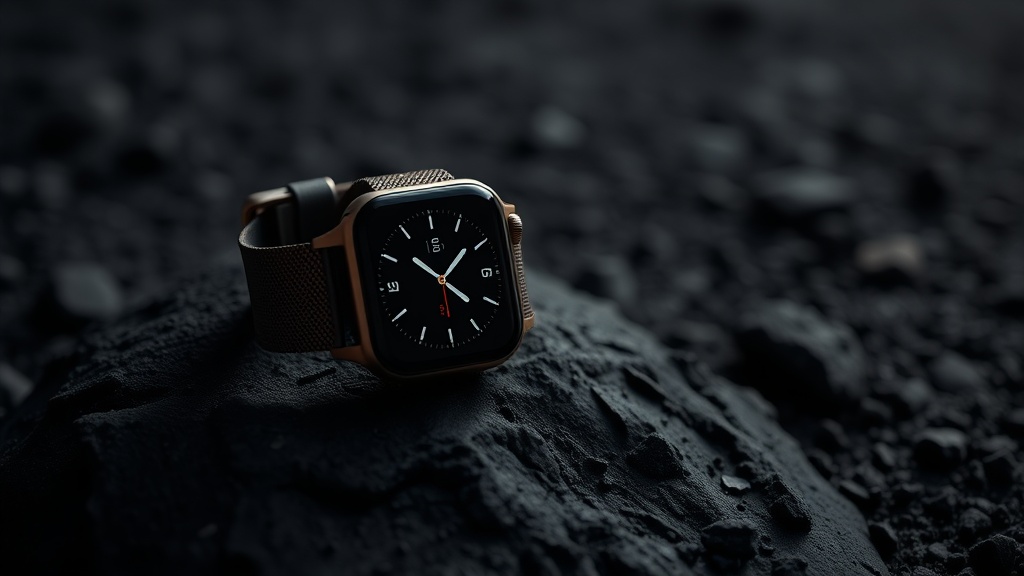
Visually, the Ultra 3 is immediately recognizable. Apple kept the 49mm titanium case, the flat sapphire crystal, the programmable Action button, and the depth-oriented Digital Crown. You still get the orange accent on the Action button. You still get the flat edges that stop the watch rolling off a rock shelf. In the hand, the case feels identical to the Ultra 2 — which is fine, because the Ultra 2 case was already excellent.
What is new is under the glass. The Ultra 3 ships with a new LTPO3 display that Apple says delivers a wider viewing angle and can now run the always-on face with an always-on second hand on the Modular Ultra watch face. DC Rainmaker's unit measured a display area roughly 5 percent larger than the Ultra 2 in pixel square millimeters — a small but real increase driven by shrinking the bezel rather than growing the case. Peak brightness is unchanged at up to 3,000 nits, per Apple's spec sheet, which remains the brightest display on any mainstream smartwatch.
The watch is rated for 100-meter water resistance and carries a recreational scuba dive rating to 40 meters, confirmed by Apple's specifications page. It also holds the EN 13319 dive computer certification from the Ultra 2, which is why the Oceanic+ app continues to work as a primary dive tool rather than a toy.
Two finishes are offered: natural titanium and black titanium. Apple sells the cellular hardware as standard — there is no Wi-Fi-only SKU — which is how it justifies the jump to 5G networking.
Display and Always-On Seconds
The Modular Ultra face now supports ticking seconds while the watch is in always-on mode. On paper that sounds trivial. In practice, it is the kind of refinement that Garmin owners have had for years and that Apple has stubbornly withheld until the LTPO3 panel made it viable without tanking battery life. Combined with the extra pixel real estate at the edges, the Ultra 3 is the first Apple Watch where a glanceable watch face finally looks dense enough for a real tool watch.
Outdoors in direct sun, the 3,000-nit panel remains legible at distance. The Night Mode (red-out) view continues to work well for dark-adapted eyes on early alpine starts.
Health Sensors and watchOS Features
The Ultra 3 inherits the Series 10 sensor stack and adds two software-first features that matter. The first is hypertension detection. Based on 30-day rolling optical heart data, watchOS now issues a notification if your patterns look consistent with chronic high blood pressure, nudging you toward a clinical measurement. Apple is careful to frame this as a prompt rather than a diagnosis, which is the right call.
The second is a rebuilt sleep score. Apple finally joined Oura, Fitbit, and Garmin in distilling its rich sleep-stage data into a single 0–100 number with trend context. DC Rainmaker flagged one clear flaw: the scoring penalizes early bedtimes even when total duration is healthy. Expect a software tweak here. The underlying stage data remains solid.
Beyond the new additions, the core set returns: temperature sensing for cycle tracking and wellness trends, overnight blood oxygen (outside the United States by default, enabled here via the late-2024 software workaround), ECG, and the FDA-cleared irregular rhythm notifications. Heart rate performance during workouts is, per DC Rainmaker, "generally quite good" — which is to say competitive with a chest strap in steady-state efforts and prone to the same wrist-optical artifacts as every other watch during rapid interval work.
GPS Accuracy vs Garmin Fenix
This is the question people actually want answered. Is the Ultra 3 finally an adventure-grade GPS watch?
DC Rainmaker's most quotable data point comes from a 70-kilometer mountain hike where the Apple Watch Ultra 3 and a Suunto unit finished "within 70m (on 70,000m), which is astonishing." That is a 0.1 percent tracking delta on a long, mixed-terrain effort — the kind of result that used to be reserved for Garmin Fenix and Epix owners. The Ultra 3 uses L1 and L5 dual-frequency GNSS, and the additional frequency visibly cleans up urban canyon and forest-cover scenarios where the Ultra 1 smeared the track.
Where Apple still trails Garmin is in the software layer on top of the GPS fix. Offline maps outside the United States are patchy. There is no turn-by-turn routing on a GPX file loaded from a third-party platform in the way Fenix 9 owners take for granted. Backcountry navigation on a Fenix 9 is a first-class experience; on the Ultra 3 it is workable but less mature.
For road runners, cyclists, and hikers in cellular-adjacent terrain, the Ultra 3 is now accurate enough that GPS is not the reason to pick a Garmin. For people routing themselves across a week in the Alps with no connectivity, Garmin still wins on navigation software.
Battery Life
Apple rates the Ultra 3 at up to 42 hours of normal use — a real 6-hour bump over the Ultra 2's 36 hours — and up to 72 hours in Low Power Mode. DC Rainmaker's extended testing supports the normal-use number in practice.
For GPS-tracked workouts, DC Rainmaker measured approximately 5–6 percent battery drain per hour of continuous GPS activity, which implies roughly 16–20 hours of continuous multi-band GPS recording depending on display and connectivity settings. That is not Garmin Fenix territory — the current Fenix flagship pushes 30-plus hours of multi-band GPS — but it is finally enough for a full 100-kilometer day with margin, and it is enough to sleep-track comfortably while still charging only every other day.
Charging is also faster: 0 to 80 percent in 45 minutes and a full charge in 75 minutes, based on DC Rainmaker's measurements. That makes a morning top-up before a long day genuinely practical.
Satellite, 5G, and Connectivity
The Ultra 3 is the first Apple Watch with two-way satellite messaging, currently available in the United States, Canada, and Mexico. In practice that means you can send and receive text messages from locations with no cellular coverage, and emergency SOS now works in 17 countries. Find My location updates also piggyback on the satellite link, so family members can see your position on multi-day trips through dead zones.
5G connectivity is the other headline. On T-Mobile and Verizon 5G networks, streaming music and using Apple Maps on the wrist without a phone is noticeably snappier than on the Ultra 2's LTE radio. Standalone workouts with music now start up in seconds rather than the half-minute pause the Ultra 2 sometimes introduced.
How Long Does the Apple Watch Ultra 3 Battery Last?
Apple rates the Apple Watch Ultra 3 at up to 42 hours of normal use and up to 72 hours in Low Power Mode. During continuous GPS workouts, independent testing by DC Rainmaker measured roughly 5 to 6 percent battery drain per hour, which equates to approximately 16 to 20 hours of multi-band GPS tracking. Full charging takes about 75 minutes, with an 80 percent top-up in 45 minutes.
Apple Watch Ultra 3 vs Garmin Fenix 9
The Garmin Fenix 9 remains the benchmark adventure watch for people who live outside the cellular map. Here is how the two compare on the dimensions that matter.
Battery life goes to Garmin — the Fenix 9 family pushes roughly 30-plus hours of multi-band GPS and multiple weeks in smartwatch mode versus the Ultra 3's ~18 hours of GPS and 42 hours of smartwatch use. The margin is large on long expeditions, narrower for most users' real weeks.
GPS accuracy is effectively a tie on clean terrain now, per third-party testing. Both watches use multi-band L1+L5 GNSS. The Ultra 3 is within rounding error of Garmin on most courses.
Navigation software goes to Garmin. Turn-by-turn routing, global offline topo maps, ClimbPro, and Breadcrumb-back all live in a more mature app on the Fenix 9. Apple's offline maps are improving but remain US-centric.
Health and smart features go decisively to Apple. Hypertension notifications, FDA-cleared ECG, ambient calling, a proper app ecosystem, two-way iMessage, and Apple Pay are not close on the Fenix.
Ecosystem is the tiebreaker. iPhone users who want the best possible adventure watch without leaving the Apple ecosystem now have a defensible option in the Ultra 3. Serious multi-day backcountry and ultra athletes will still want a Fenix 9 and an Ultra 3 — or will pick the Fenix and be right.
For context on how these watches fit a broader fitness wearable shortlist, see our best fitness smartwatches of 2026 roundup.
Who Should Buy the Apple Watch Ultra 3
iPhone owners upgrading from an Ultra 1 or any Series model below Series 9 will feel the biggest jump. The battery alone changes the relationship with the charger. The sensor suite, the brighter display, the satellite messaging, and the GPS upgrades compound quickly.
Ultra 2 owners have a harder call. If two-way satellite, 5G, hypertension notifications, or the 6-hour battery gain sound essential, upgrade. Otherwise the delta is thin enough to wait a generation.
Serious ultra-endurance athletes running week-long self-supported events in cellular-dead terrain should still own a Garmin Fenix 9 or similar. The Ultra 3 is a Garmin-adjacent product now — not a Garmin replacement in the deep wilderness.
Android users can safely ignore this review; the Ultra 3 does not pair with non-Apple phones.
The Verdict
The Apple Watch Ultra 3 is the first version of this watch that earns its "Ultra" branding on objective merit rather than on Apple marketing. Multi-band GPS accuracy is within rounding error of a dedicated Suunto on long courses. Battery life is finally long enough to stop thinking about the charger. Two-way satellite messaging is not a gimmick when you are on a ridge in Colorado. And the underlying Apple Watch experience — ECG, fall detection, ambient call quality, Apple Pay, and the App Store — remains unmatched by any sport-focused competitor.
The Fenix 9 is still the watch to pick for backcountry navigation, sub-weekly charging, and purely athletic use. Everywhere else, for iPhone owners, the Ultra 3 is the most compelling Apple Watch Apple has ever shipped.
What We Liked
- 42-hour normal-use battery, 72 hours in Low Power Mode
- Two-way satellite messaging works without cellular coverage
- GPS tracked within 70 meters of a Suunto watch on a 70km hike
- Hypertension notifications and new sleep score genuinely useful
- 5G cellular and always-on seconds on the Modular Ultra face
- 100m water resistance with recreational scuba diving to 40m
What Could Improve
- Offline mapping still trails Garmin outside the United States
- Workout Buddy AI occasionally produces inaccurate prompts
- $799 with cellular hardware required — no cheaper Wi-Fi-only SKU
The Verdict
The Apple Watch Ultra 3 is the first Apple wearable that can stand beside a Garmin Fenix without apology. The 42-hour battery, two-way satellite messaging, and measurably improved GPS close the credibility gap that held the Ultra 2 back. It is still not the watch to pick if you are running 100-mile ultras in a country without Apple Maps coverage, but for the iPhone owner who hikes, dives, and lifts, nothing else in the Apple catalog gets closer to a real expedition watch. Ultra 2 owners can wait; Ultra 1 and Series upgraders should not.
Was this article helpful?
Join the conversation — sign in to leave a comment and engage with other readers.
Loading comments...
Related Posts
wearables
Meta Ray-Ban Display Smart Glasses Review: The Future on Your Face
Apr 20, 2026audio
AirPods Pro 3 Review: The Best Earbuds Apple Has Ever Made
Apr 13, 2026laptops
Apple MacBook Neo Review: A Real Mac for $599 That Redefines Budget Laptops
Apr 5, 2026audio
AirPods Max 2 Review: Better Where It Counts, Frustrating Where It Hasn't Changed
Apr 5, 2026Enjoyed this article?
Get the best tech reviews, deals, and deep dives delivered to your inbox every week.