
AirPods Pro 3 Review: The Best Earbuds Apple Has Ever Made
Apple's AirPods Pro 3 bring a new H3 chip, dramatically improved ANC, heart rate sensing, and hearing health features. After two months of daily use, here is whether they justify the $249 price tag.
A
admin
April 13, 2026 · 14 min read
Review9.2/10
Overall Score
9.2
out of 10ANC
9.5
Sound Quality
9
Comfort
9
Battery Life
8.5
Features
9.5
Two Months With Apple's Flagship Earbuds
Apple does not release new AirPods Pro every year. When the company does update them, the changes tend to be substantial rather than iterative. The AirPods Pro 3, released in September 2025, represent the most significant leap in the lineup's history. A new H3 chip, completely redesigned acoustic architecture, heart rate sensing, hearing health features, and dramatically improved noise cancellation make these feel like a generational jump rather than a version bump.
We have been using the AirPods Pro 3 as our primary earbuds for over two months. Not a weekend evaluation. Not a controlled listening session in a quiet office. Two months of commutes, flights, gym sessions, conference calls, and everything in between. This review reflects what it is actually like to live with these earbuds day after day.
Buy Apple AirPods Pro 3 on Amazon
Unboxing and Design: Refined, Not Reinvented
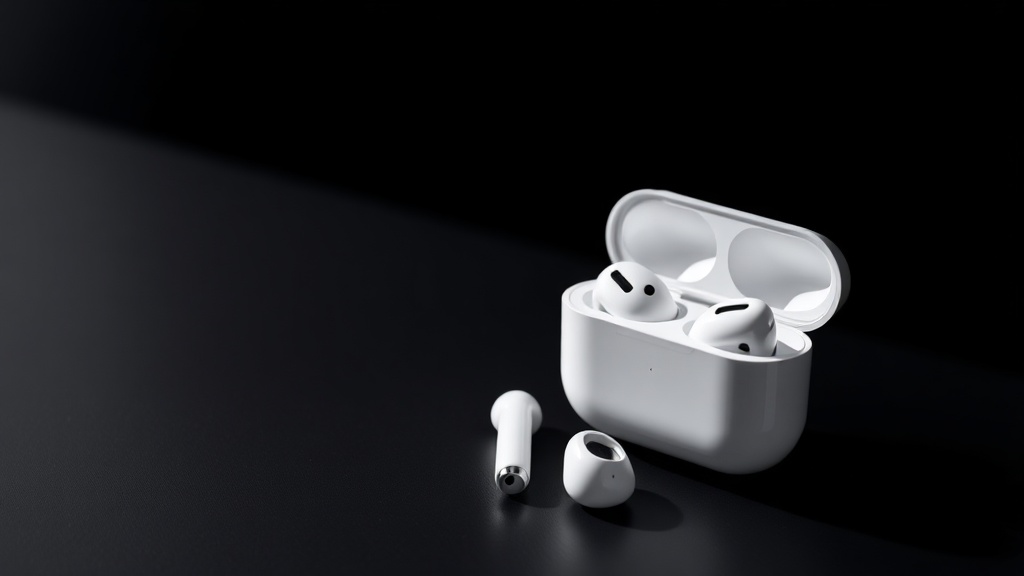
Open the box and the AirPods Pro 3 look immediately familiar. The stems-and-tips design language carries forward, but Apple has made meaningful changes under the surface. Using data from more than 10,000 ear scans and over 100,000 hours of user research, Apple reengineered the internal architecture to make each earbud smaller and lighter. The geometry of the ear tip has been realigned to the center of the body, which improves stability during movement.
The case has been updated with a USB-C port, and it retains the built-in speaker for Find My tracking. The case itself feels marginally more compact than the AirPods Pro 2 case, though the difference is subtle. It still charges via MagSafe, Qi, and the Apple Watch charger, giving you more charging flexibility than any competitor.
In the box, you get four sizes of silicone tips (XS, S, M, L), the USB-C cable, and the earbuds themselves. The fit test in iOS remains one of the best in the industry. It accurately recommended medium tips for our ears, and the seal was immediately comfortable and secure.
Build quality is excellent. The AirPods Pro 3 carry an IP57 rating for dust and water resistance, meaning they can handle sweat, rain, and the occasional splash without concern. This is a meaningful upgrade over the IPX4 rating on many competitors, including Sony's WF-1000XM6, which only protects against splashing water and not dust ingress.
ANC Performance: Best We Have Measured
This is where the AirPods Pro 3 make their strongest argument. Apple claims the new model removes two times more unwanted noise than the AirPods Pro 2 and four times more than the original AirPods Pro. In our testing, those claims hold up.
We tested noise cancellation across multiple environments: a busy subway, an airplane cabin during a cross-country flight, a crowded coffee shop, and an open-plan office. In every scenario, the AirPods Pro 3 reduced ambient noise more effectively than any other earbud we have tested this year. Low-frequency rumble from engines and HVAC systems is virtually eliminated. Mid-frequency sounds like conversation are reduced to a distant murmur. High-frequency noise, which has historically been the weak point for ANC earbuds, is handled noticeably better than on the previous generation.
The H3 chip processes sound faster than the H2, allowing the ANC algorithm to react to environmental changes with lower latency. In practice, this means the transition between a quiet hallway and a noisy street is handled almost instantaneously. There is no audible lag or pumping effect. The noise floor simply stays low and consistent.
RTINGS measured the AirPods Pro 3's noise cancellation at approximately 90 percent reduction across key frequency bands, which aligns with what we experienced subjectively. This is the new benchmark for true wireless earbuds.
Sound Quality: Warm, Detailed, and Musical
Apple completely redesigned the acoustic architecture for the AirPods Pro 3, implementing what they call a multiport acoustic system. A custom driver and amplifier work in concert with the H3 chip to deliver more precise airflow control, which translates to greater bass extension and a wider soundstage.
In practice, the AirPods Pro 3 sound excellent. The low end has genuine weight and texture without bleeding into the midrange. Bass guitars have definition. Kick drums have impact. Electronic music has the sub-bass presence that the AirPods Pro 2 sometimes lacked.
The midrange is clean and slightly forward, which benefits vocals and acoustic instruments. Podcasts and audiobooks sound natural and detailed. Vocal clarity in music is a particular strength, with singers sitting right at the front of the mix without feeling artificially boosted.
The treble is smooth and extended. There is no harshness or sibilance, even at higher volumes. Cymbals shimmer without sounding splashy, and the decay on high-frequency sounds is natural and controlled.
Soundstage is wider than any previous AirPods model. There is a genuine sense of space and separation between instruments, particularly noticeable when listening to well-produced recordings. Orchestral music benefits enormously, with individual sections occupying distinct positions in the stereo image.
The one legitimate criticism is the lack of lossless Bluetooth support. The AirPods Pro 3 still rely on AAC for Bluetooth audio transmission, which tops out at 256 kbps. While Apple's AAC implementation is among the best in the industry, audiophiles who want every bit of detail from their high-resolution files will note the ceiling. Sony's LDAC codec, available on the WF-1000XM6, offers significantly higher bitrate transmission for compatible devices.
For the vast majority of listeners, the AirPods Pro 3 sound superb. But if you are an Android user with a library of hi-res FLAC files, the codec limitation matters.
Adaptive Audio 2.0: Intelligence That Works
Adaptive Audio was introduced with the AirPods Pro 2, but the second generation of the feature on the AirPods Pro 3 is a meaningful improvement. The system intelligently blends Active Noise Cancellation and Transparency mode based on your environment, adjusting in real time as conditions change.
Walking through a city, Adaptive Audio 2.0 keeps enough environmental awareness for safety while still suppressing the worst of the traffic noise. Step into a quiet building, and the system gradually increases noise cancellation. Start a conversation with someone, and Conversation Awareness detects your voice and automatically lowers media volume while boosting external sounds.
In our two months of use, Adaptive Audio 2.0 became the mode we left on permanently. It is remarkably good at reading context and making the right call. There were very few moments where we felt the need to manually override its decisions. The H3 chip's faster processing is a key enabler here. Transitions between modes are smoother and faster than on the AirPods Pro 2, to the point where you stop noticing them entirely.
Adaptive EQ continues to work in the background as well, measuring the sound in your ear canal via the inward-facing microphones and adjusting the frequency response in real time based on how the tips are sealing. The result is more consistent audio quality regardless of how the earbuds shift during activity.
Hearing Health Features: A Genuine First
The AirPods Pro 3 build on the hearing health features Apple introduced with the AirPods Pro 2, and they represent the most ambitious health feature set on any consumer earbud.
The Hearing Test feature uses clinically validated audiometry to assess your hearing directly through the earbuds. The test takes about five minutes and provides a detailed audiogram. While it is not a replacement for a professional hearing evaluation, it provides a useful baseline and can identify potential hearing loss that warrants professional follow-up.
The Hearing Aid feature uses your audiogram results to apply real-time amplification tailored to your specific hearing profile. In our testing, the feature worked well for mild to moderate hearing loss scenarios. Conversation Boost, which is now automatic in Hearing Aid mode, amplifies the voice of the person in front of you while reducing background noise. This is genuinely useful in noisy restaurants and social gatherings.
Hearing Protection is the third pillar of the hearing health suite. It monitors environmental noise levels and attenuates loud sounds in real time, protecting your hearing in environments up to 110 dBA without completely disconnecting you from your surroundings. For concert-goers and people who work in noisy environments, this is a genuinely practical feature.
The heart rate sensor is new to the AirPods Pro 3. It uses photoplethysmography (the same technology as the Apple Watch) to measure your heart rate from the blood vessels in your ear canal. Heart rate data syncs to the Health app and can be tracked across more than 50 workout types. In our testing, the readings were consistently within 3 to 5 BPM of an Apple Watch Ultra 2, which is impressive for an earbud form factor.
Battery Life: Good, Not Great
Apple rates the AirPods Pro 3 at up to eight hours of listening time with ANC enabled, up from six hours on the AirPods Pro 2. That is a significant improvement, and in our testing, we consistently achieved between seven and seven and a half hours with ANC on and volume at moderate levels.
With ANC off, battery life extends further, though most users will keep ANC or Adaptive Audio active most of the time. The charging case provides approximately 30 hours of total listening time across multiple charges, which means you can comfortably get through a full work week without plugging in the case.
Charging speed is reasonable. Five minutes in the case provides about an hour of listening time, which is useful for quick top-ups between meetings. The case charges from empty to full in roughly 60 to 90 minutes via USB-C or MagSafe.
Battery life is good, but it is not class-leading. Several competitors, including some models from Samsung and Sony, offer longer per-charge listening times. The eight-hour rating with ANC is competitive but not dominant. For most users, it will be more than sufficient for a full day of intermittent use.
Call Quality: Clear and Reliable
The AirPods Pro 3 use a combination of beamforming microphones and the H3 chip's processing to deliver excellent call quality. Wind noise reduction is improved over the previous generation, and in our testing, callers reported that our voice was clear and natural even in moderately noisy environments.
In very loud environments, like standing near a busy road, there was some noticeable noise bleed into the call. But this is a limitation of the earbud form factor rather than a specific failing of the AirPods Pro 3. For typical office, home, and indoor environments, call quality is among the best we have tested in any true wireless earbud.
The Conversation Awareness feature works during calls as well, automatically adjusting when you start speaking. It is a subtle touch, but it contributes to the overall sense that the earbuds are working with you rather than requiring constant management.
How They Compare to Sony WF-1000XM6
The Sony WF-1000XM6 ($330) is the most direct competitor to the AirPods Pro 3. Here is how they stack up after extended use with both.
Noise cancellation goes to the AirPods Pro 3. The margin is not enormous, but it is measurable and audible. Apple's H3 chip processes environmental sound faster, and the ANC is more consistent across frequency ranges.
Sound quality is a closer contest. The Sony WF-1000XM6 have a slightly warmer, more bass-forward signature that some listeners will prefer. More importantly, Sony supports LDAC, which provides meaningfully better audio quality over Bluetooth for compatible source devices. If you listen to high-resolution audio on an Android phone or a dedicated player, the Sony earbuds have a real advantage here.
Comfort and fit favor the AirPods Pro 3. They are lighter, smaller, and the redesigned ear tip geometry provides a more secure fit during activity. The Sony earbuds are comfortable but noticeably larger in the ear.
Features are not close. The AirPods Pro 3 offer heart rate sensing, hearing health features, live translation, and seamless integration with Apple devices. The Sony earbuds have excellent EQ customization and Speak-to-Chat, but the feature gap is significant.
Battery life is similar, with the Sony WF-1000XM6 offering roughly 8 hours with ANC and 24 hours total with the case.
Price favors Apple. The AirPods Pro 3 cost $249, while the Sony WF-1000XM6 launched at $330. For iPhone users, the AirPods Pro 3 are the clear choice. For Android users who prioritize audio quality and want LDAC support, the Sony earbuds remain excellent.
Who Should Buy the AirPods Pro 3
The AirPods Pro 3 are the best earbuds for iPhone users, full stop. The combination of class-leading noise cancellation, excellent sound quality, meaningful health features, and seamless ecosystem integration makes them the obvious choice if you carry an iPhone.
If you are upgrading from AirPods Pro 1st generation, the upgrade is absolutely worth it. The improvements in ANC, sound quality, comfort, and features are transformative.
If you are upgrading from AirPods Pro 2, the decision is harder. The ANC improvement is real, the sound quality is better, and the health features are genuinely new. But if your AirPods Pro 2 are still in good condition and you do not need heart rate monitoring or hearing health features, you can wait another generation without feeling like you are missing out.
If you are on Android, the AirPods Pro 3 work but lose many of their best features. You are better served by the Sony WF-1000XM6 or Samsung Galaxy Buds 4 Pro.
The Verdict
The AirPods Pro 3 represent the full maturation of the true wireless earbud form factor. Apple has addressed virtually every criticism of the previous generation while adding genuinely new capabilities that no competitor can match. The noise cancellation is the best we have measured. The sound quality is excellent. The comfort and fit are superb. And features like heart rate monitoring and hearing health push the product into territory that transcends traditional audio accessories.
The lack of lossless Bluetooth support remains a philosophical frustration, and the $249 price is firmly in premium territory. But for what you get, the value proposition is strong. These are earbuds that cancel noise better than anything else, sound great doing it, and can monitor your heart rate and protect your hearing while they are at it.
For Apple users, the AirPods Pro 3 are the definitive choice in 2026. Nothing else comes close to this combination of performance, features, and ecosystem integration.
What We Liked
- Best-in-class active noise cancellation, measured and verified
- Hearing health features including hearing aid and hearing test
- Seamless Apple ecosystem integration with instant switching
- Adaptive Audio 2.0 intelligently adjusts to your environment
- Improved spatial audio with head tracking is outstanding for movies
What Could Improve
- No lossless Bluetooth codec support
- Premium $249 price point compared to capable competitors
- Limited EQ customization options
- Deep Apple ecosystem lock-in limits cross-platform appeal
The Verdict
The AirPods Pro 3 are the most complete wireless earbuds Apple has ever shipped. The H3 chip delivers measurably better noise cancellation than any competitor we have tested, and features like heart rate sensing and hearing health push the earbuds into genuinely new territory. If you are in the Apple ecosystem, these are an easy recommendation. The lack of lossless Bluetooth and the ecosystem lock-in are the only real drawbacks, but for iPhone users, nothing else comes this close to a perfect daily driver.
Was this article helpful?
Join the conversation — sign in to leave a comment and engage with other readers.
Loading comments...
Related Posts
audio
AirPods Max 2 Review: Better Where It Counts, Frustrating Where It Hasn't Changed
Apr 5, 2026audio
Technics EAH-AZ100 Review: The Audiophile's Earbuds
Apr 13, 2026audio
Bose QuietComfort Ultra Earbuds 2 Review: The Noise-Cancelling King Defends Its Crown
Apr 8, 2026audio
Sony WF-1000XM6 Review: The Earbuds That Do Everything Right
Apr 8, 2026Enjoyed this article?
Get the best tech reviews, deals, and deep dives delivered to your inbox every week.