
Nvidia RTX 5080 Review: The Sweet Spot GPU for Gamers in 2026
Nvidia's RTX 5080 brings Blackwell architecture and DLSS 4 to the $999 price point. We benchmarked it against the 5090, 4080, and AMD's best to find out if it earns its sweet-spot reputation.
A
admin
April 4, 2026 · 12 min read
Review8.7/10
Overall Score
8.7
out of 10Performance
8.5
Ray Tracing
9
Power Efficiency
8
Value
8.5
Noise
9
The GPU That Sits Between Sensible and Excessive
Every GPU generation has a card that occupies the sweet spot: enough performance to handle demanding games at high resolutions without the wallet-destroying price of the flagship. For the RTX 50 series, Nvidia intends the RTX 5080 to be that card. At $999 MSRP, it sits at half the price of the $1,999 RTX 5090 while promising enough performance for high-refresh 4K gaming.
I have been testing the RTX 5080 Founders Edition for four weeks, running it through a suite of modern games at 1440p and 4K, synthetic benchmarks, ray tracing stress tests, and real-world creative workloads. This review covers what the card does well, where it disappoints, and who should buy it.
Specifications and Architecture
The RTX 5080 is built on Nvidia's Blackwell architecture, the successor to Ada Lovelace. Here are the key specifications:
- CUDA Cores: 10,752
- Memory: 16 GB GDDR7 on a 256-bit bus
- Base Clock: 2.30 GHz
- Boost Clock: 2.62 GHz
- TDP: 360W
- Memory Bandwidth: 960 GB/s
- RT Cores: 4th generation
- Tensor Cores: 5th generation
- Manufacturing Process: TSMC 4NP
The jump to GDDR7 memory is significant. The 960 GB/s bandwidth represents a substantial increase over the RTX 4080's 717 GB/s, and it shows in memory-intensive workloads and high-resolution gaming.
The elephant in the room is the 16 GB VRAM allocation. Nvidia has kept this unchanged from the RTX 4080, which launched in late 2023. At $999 in 2026, 16 GB feels insufficient for a card positioned as a premium product. Several modern games already approach or exceed 12 GB of VRAM usage at 4K with maximum textures, and that number will only grow. The RTX 5090 ships with 32 GB, and AMD's competing cards offer 24 GB. Nvidia's decision to hold the line at 16 GB is a calculated bet that DLSS and upscaling will reduce the practical impact, but it remains the card's most significant long-term vulnerability.
The Founders Edition Design
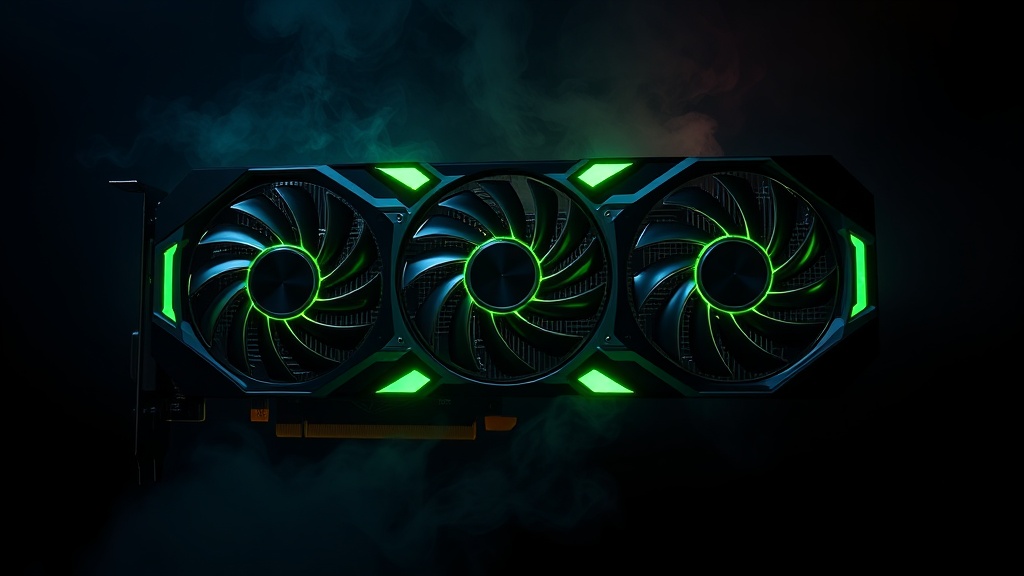
Nvidia's Founders Edition cooler for the RTX 5080 is a refined version of the dual-fan design used on the RTX 40 series. The card measures 304 mm in length and occupies a 2.5-slot footprint, making it compatible with the vast majority of mid-tower and full-tower cases.
Build quality is excellent, with a dense aluminum shroud and a sturdy backplate. The card feels premium without being excessively heavy. Two 8-pin power connectors are required via the 12V-2x6 adapter, and Nvidia includes the necessary adapter cable in the box.
The industrial design is understated: matte black with minimal branding. If you prefer your GPU to disappear inside the case rather than announce itself, the Founders Edition delivers.
Rasterization Performance
Let us start with what most gamers care about most: raw frame rates without ray tracing or upscaling.
4K Performance (3840 x 2160, Max Settings)
| Game | RTX 5080 | RTX 4080 | Improvement |
|---|---|---|---|
| Cyberpunk 2077 | 78 fps | 65 fps | +20% |
| Alan Wake 2 | 62 fps | 54 fps | +15% |
| Hogwarts Legacy | 94 fps | 82 fps | +15% |
| Spider-Man 2 | 71 fps | 63 fps | +13% |
| Black Myth: Wukong | 68 fps | 58 fps | +17% |
| Starfield | 82 fps | 74 fps | +11% |
| Call of Duty MW3 | 112 fps | 98 fps | +14% |
The generational improvement over the RTX 4080 ranges from 11 to 20 percent, depending on the title. This is consistent with what other reviewers have found. Titles that are more compute-bound see larger gains, while those limited by memory bandwidth or CPU bottlenecks show smaller improvements.
For context, the RTX 5080 at 4K delivers frame rates that the RTX 4090 achieved at the same resolution, but at a lower price point. If you skipped the 40 series entirely, this is a meaningful jump. If you already own a 4080 or 4080 Super, a 15 percent average improvement is difficult to justify at $999.
1440p Performance (2560 x 1440, Max Settings)
At 1440p, the RTX 5080 is more GPU than most monitors can keep up with. Every title in our test suite exceeded 100 fps, and many pushed past 144 fps. Competitive shooters like Valorant and Counter-Strike 2 easily hit 300+ fps, limited more by CPU and engine constraints than GPU capability.
If your primary use case is 1440p gaming, the RTX 5080 is overkill in the best possible way, and it means the card will remain viable at this resolution for years to come.
Ray Tracing Performance
Ray tracing is where Blackwell's architectural improvements are most apparent. The 4th-generation RT cores provide substantial gains over Ada Lovelace, particularly in titles with intensive path tracing implementations.
4K Ray Tracing (Max RT Settings, No DLSS)
| Game | RTX 5080 | RTX 4080 | Improvement |
|---|---|---|---|
| Cyberpunk 2077 (Path Tracing) | 34 fps | 24 fps | +42% |
| Alan Wake 2 (Full RT) | 28 fps | 20 fps | +40% |
| Metro Exodus Enhanced (Full RT) | 52 fps | 38 fps | +37% |
| Portal RTX | 44 fps | 31 fps | +42% |
The 37 to 42 percent improvement in ray tracing is impressive and represents the largest generational leap in this review. Path-traced games, which simulate realistic lighting by tracing every ray of light, benefit enormously from the improved RT core architecture.
However, these numbers also illustrate why DLSS remains essential. Even the RTX 5080 cannot sustain 60 fps at 4K with full path tracing in demanding titles. With DLSS enabled, these numbers climb to playable frame rates, which brings us to the card's most significant feature.
DLSS 4 and Multi Frame Generation
DLSS 4 is the tentpole software feature for the RTX 50 series, and the RTX 5080 supports its full feature set, including Multi Frame Generation. Previous DLSS versions generated one additional frame between each rendered frame. Multi Frame Generation can produce up to three additional frames, effectively quadrupling the perceived frame rate.
The results are dramatic. Cyberpunk 2077 with path tracing at 4K jumps from 34 fps (native) to over 120 fps with DLSS 4 Quality mode and Multi Frame Generation enabled. Alan Wake 2 climbs from 28 fps to approximately 100 fps. These numbers transform technically unplayable scenarios into smooth, fluid experiences.
Input latency is the critical question with frame generation. Nvidia's Reflex 2 technology works in conjunction with DLSS 4 to minimize the latency penalty, and in practice, the results are impressive. With Reflex 2 active, the additional latency from Multi Frame Generation is roughly 4 to 8 milliseconds, which is imperceptible for most players in single-player and casual multiplayer scenarios. Competitive esports players will likely want to disable frame generation, but for the vast majority of gamers, the trade-off is overwhelmingly positive.
DLSS 4 also introduces an improved upscaling model that reduces the ghosting and shimmer artifacts that occasionally appeared in DLSS 3.5. Fine details like chain-link fences, hair, and foliage are rendered more cleanly, and temporal stability is improved. This is a subtle but welcome refinement that benefits all DLSS-supported titles.
Power Consumption and Thermals
The RTX 5080's TDP is 360W, a 40W increase over the RTX 4080 and a 20W increase over the RTX 4080 Super. In practice, I measured the following power consumption:
- Idle: 18W
- Desktop browsing and video: 25-35W
- Gaming (4K, max settings): 340-365W
- Stress test (FurMark): 372W
The card draws more power than its predecessor, but the performance-per-watt ratio has improved thanks to the more efficient Blackwell architecture. You will want a 850W or higher PSU, and Nvidia recommends 850W as the minimum. A quality 1000W PSU provides comfortable headroom.
Thermal performance on the Founders Edition is strong. Under sustained gaming load, the GPU temperature stabilized at 72 degrees Celsius with the fan curve at default settings. The hotspot temperature, which measures the hottest point on the die, peaked at 84 degrees Celsius. These are well within safe operating parameters and represent a slight improvement over the RTX 4080 Founders Edition.
Noise Levels
The Founders Edition cooler is impressively quiet. Under gaming load, noise levels measured 34 dB(A) at a distance of 30 cm from the card, which is quieter than most case fans at medium speed. At idle, the fans stop completely, making the card silent during desktop use.
During extended stress testing, the fans ramp up to approximately 38 dB(A), which is audible in a quiet room but far from intrusive. For a card pushing 360W, this is commendable thermal and acoustic engineering.
Creative and Productivity Workloads
The RTX 5080 is not just a gaming card. Its 10,752 CUDA cores and 16 GB VRAM make it a capable option for creative professionals working in 3D rendering, video editing, and AI-accelerated workflows.
In Blender's BMW benchmark, the RTX 5080 rendered the scene in 18 seconds, compared to 24 seconds for the RTX 4080 and 12 seconds for the RTX 5090. DaVinci Resolve's GPU-accelerated effects and exports show similar scaling, with the 5080 completing a 10-minute 4K timeline export approximately 20 percent faster than the 4080.
For machine learning and AI workloads, the 16 GB VRAM is the limiting factor. Models that fit within 16 GB run well, but larger models that exceed this threshold require the RTX 5090 or a professional-grade card. If AI and ML are core parts of your workflow, the VRAM limitation is a genuine concern.
Availability and Real-World Pricing
This is where the RTX 5080 story gets frustrating. The $999 MSRP is a reasonable price for the performance offered, but actually buying a card at that price has been difficult since launch. At the time of writing, most retailers list the RTX 5080 Founders Edition as out of stock, and third-party cards from ASUS, MSI, and Gigabyte are selling at $1,100 to $1,200.
Stock availability has improved gradually since the February 2026 launch, and prices are trending downward. But the gap between MSRP and real-world pricing is a significant factor in the value proposition. At $999, the RTX 5080 is a good deal. At $1,200, the calculus changes considerably, especially when AMD's competing cards are more readily available at their advertised prices.
The Competition: AMD RX 7900 XTX
AMD's RX 7900 XTX remains the primary alternative at this price point. In rasterized gaming, the two cards trade blows, with each winning some titles and the overall gap sitting within 10 percent in either direction. The AMD card offers 24 GB of VRAM, which is a significant advantage for longevity and creative workloads.
Where the RTX 5080 pulls ahead decisively is in ray tracing performance and AI-accelerated features. DLSS 4 is substantially more capable than AMD's FSR 3, and the ray tracing hardware gap remains wide. If ray tracing and DLSS matter to you, the RTX 5080 is the clear choice. If you prioritize raw rasterization performance and VRAM, AMD offers a compelling alternative.
Who Should Buy the RTX 5080
The RTX 5080 makes the most sense for three groups:
Upgraders from the RTX 3080 or older: If you skipped the 40 series, the RTX 5080 represents a transformative improvement. Two generations of architectural advances, plus DLSS 4, deliver a dramatically better gaming experience.
4K gamers who want sub-flagship pricing: The RTX 5080 delivers genuine 4K gaming capability at high-to-max settings without the $1,999 price tag of the 5090. It is the most cost-effective path to high-quality 4K gaming with ray tracing.
Creators and streamers: The hardware encoder, CUDA performance, and overall capability make the 5080 a strong all-rounder for content creation alongside gaming.
The RTX 5080 does not make sense for RTX 4080 owners unless you are specifically motivated by DLSS 4 and improved ray tracing. The 10 to 20 percent rasterization improvement alone does not justify a $999 expenditure.
Longevity Concerns
The 16 GB VRAM question deserves its own section because it will define the card's useful lifespan. Today, 16 GB is sufficient for virtually every game at 4K. In two years, that may no longer be true. The trend in game development is toward larger, more detailed textures and more complex scenes that consume more VRAM. Nvidia is betting that DLSS and texture compression will offset this trend. They may be right, but it is a gamble that AMD's 24 GB cards do not require.
If you buy the RTX 5080 and plan to use it for three to four years, the VRAM limitation is a risk worth acknowledging. If your upgrade cycle is two years, it is unlikely to matter.
The Verdict
The Nvidia RTX 5080 is the best GPU you can buy for under $1,000, assuming you can actually find it at that price. It delivers strong 4K gaming performance, impressive ray tracing capabilities, and transformative DLSS 4 technology. The generational improvement over the RTX 4080 is real but modest, and the unchanged 16 GB VRAM allocation is a missed opportunity. At its MSRP of $999, it earns a confident recommendation. At inflated street prices above $1,100, the value proposition weakens, and you should consider waiting for stock to normalize. The RTX 5080 is not a revolutionary leap, but it is a well-engineered, capable graphics card that will serve gamers well for years to come.
What We Liked
- DLSS 4 with Multi Frame Generation is a genuine game-changer
- Strong 4K gaming performance in rasterized and ray-traced titles
- Founders Edition cooler is quiet under load
- Half the price of the RTX 5090 with roughly 70% of its performance
- Blackwell architecture delivers meaningful ray tracing improvements
What Could Improve
- Only 16 GB VRAM, unchanged from the RTX 4080
- 10-20% generational improvement over RTX 4080 feels modest
- $999 MSRP is hard to find at retail due to stock shortages
- 360W TDP is a 20W increase over the RTX 4080 Super
The Verdict
The RTX 5080 is a competent but not transformative GPU upgrade. Its raw rasterization gains over the RTX 4080 are modest, but DLSS 4 and improved ray tracing performance make it the best overall GPU for 4K gaming under $1,000. The 16 GB VRAM limitation is a concern for longevity, and the real-world pricing above MSRP dents its value proposition. If you are on a 30-series card or older, the 5080 is an excellent upgrade. If you own a 4080, wait for the next generation.
Was this article helpful?
Join the conversation — sign in to leave a comment and engage with other readers.
Loading comments...
Related Posts
gaming
RTX 5070 Ti vs RX 9070 XT: Best Mid-Range GPU for 1440p Gaming
Apr 4, 2026gaming
How to Return a Game on Steam: Complete 2026 Refund Guide
Apr 4, 2026gaming
How to Build a Gaming PC in 2026: Complete Parts Guide and Assembly
Apr 4, 2026gaming
AR and VR Gaming in 2026: Trends Shaping the Future of Play
Apr 4, 2026Enjoyed this article?
Get the best tech reviews, deals, and deep dives delivered to your inbox every week.