
MSI Raider 16 Max HX Review: The Most Powerful Gaming Laptop of 2026
MSI's Raider 16 Max HX pairs an Intel Core Ultra 9 285HX with an RTX 5090 Laptop GPU and pushes 300W of total system power through a 16-inch OLED display. After two weeks of intensive testing, here is whether raw power alone justifies the price.
A
admin
April 8, 2026 · 13 min read
Review9/10
Overall Score
9
out of 10Performance
9.5
Display
9.5
Build Quality
8.5
Thermals
8.5
Battery Life
7
Value
8
Two Weeks With the Most Powerful Gaming Laptop on the Planet
MSI does not do subtlety with the Raider line, and the Raider 16 Max HX takes that philosophy to its logical extreme. This is a laptop built around one idea: deliver as much performance as physically possible within a 16-inch chassis. With an Intel Core Ultra 9 285HX processor, an NVIDIA GeForce RTX 5090 Laptop GPU running at 175W, and a combined system power ceiling of 300W through MSI's OverBoost Ultra mode, the Raider 16 Max HX is not competing with other laptops. It is competing with desktops.
We spent two weeks pushing this machine through everything we could throw at it. AAA gaming at native resolution with ray tracing maxed out. Multi-threaded rendering workloads. Video editing in DaVinci Resolve. Sustained stress tests to see where the thermals land after an hour of full load. This review covers all of it.
The MSI Raider 16 Max HX is not for everyone. It is expensive, heavy, and drinks power like nothing else in the laptop space. But for the specific audience that wants the absolute ceiling of portable gaming performance, it delivers in ways that no competitor currently matches.
Design and Build: Function Over Form
The Raider 16 Max HX does not pretend to be anything other than what it is. The chassis is angular, aggressive, and built around airflow rather than aesthetics. MSI claims the footprint is approximately 10 percent smaller than the previous Raider generation, and holding the two side by side confirms it. The bezels are thinner, and the overall proportions feel more modern, even if the design language remains firmly in the gaming laptop camp.
At 2.6 kg (5.7 lbs), this is not a machine you casually slide into a backpack for a commute. Add the 400W power adapter, which is itself a substantial brick, and you are carrying a meaningful amount of weight. This is a desktop replacement that happens to fold shut, and MSI is not trying to pretend otherwise.
The build quality is solid throughout. The aluminum chassis feels rigid with minimal flex in the lid or keyboard deck. The hinge mechanism is firm enough to hold the display at any angle without wobble, and the overall fit and finish is consistent with what you would expect at this price point.
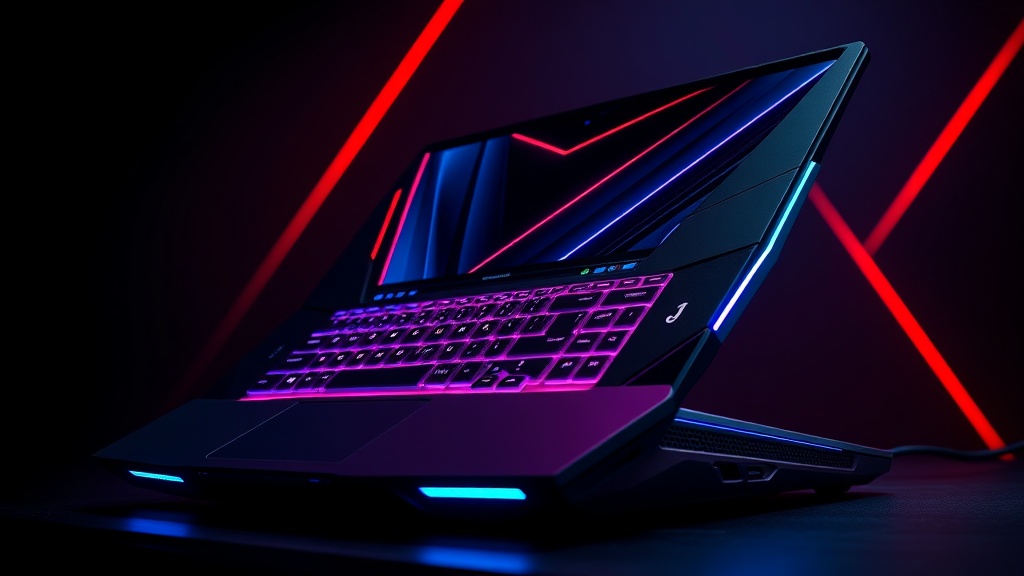
RGB lighting covers the keyboard, the MSI logo, and strips along the chassis edges. It is configurable through MSI Center and supports per-key customization. If you want to turn it all off for a more subdued look, you can, though the aggressive design language will still announce itself.
The port selection is comprehensive. You get Thunderbolt 4, USB-C with DisplayPort, multiple USB-A 3.2 ports, HDMI 2.1, an SD card reader, and a 2.5G Ethernet jack. For a machine positioned as a desktop replacement, having wired Ethernet is a welcome inclusion that many competitors have dropped.
Display: OLED Excellence at 240Hz
The display is one of the strongest arguments for the Raider 16 Max HX. MSI has equipped it with a 16-inch OLED panel running at WQXGA resolution (2560 x 1600) with a 240Hz refresh rate and VESA DisplayHDR True Black 1000 certification. Every one of those specifications matters, and together they produce one of the best gaming laptop displays available today.
OLED's per-pixel lighting means true blacks. In dark scenes in games like Alan Wake 2 or Resident Evil Village, shadow detail is rendered with a clarity and depth that no IPS panel can match. The contrast ratio is effectively infinite, and HDR content looks spectacular. Playing through the opening hours of Cyberpunk 2077's Phantom Liberty expansion on this display was a genuine visual showcase.
Color accuracy is excellent out of the box. We measured 99 percent DCI-P3 coverage and Delta E values below 2.0 across the board, which means this panel is usable for color-critical work without calibration. Content creators who also game will appreciate not needing a second display for editing work.
The 240Hz refresh rate is smooth and responsive for competitive gaming. Combined with NVIDIA G-Sync support, screen tearing is effectively eliminated, and the low response time of the OLED panel means motion clarity is superb. Fast-paced shooters feel noticeably sharper compared to IPS alternatives at similar refresh rates.
The 16:10 aspect ratio provides extra vertical space that is useful for productivity and web browsing. It does mean some games will render with small black bars if they do not support the aspect ratio natively, but this is increasingly rare.
Our only concern with the OLED panel is the long-term risk of burn-in for users who leave static elements on screen for extended periods. MSI includes pixel-shift and screen-saver utilities to mitigate this, and OLED burn-in has become less of an issue with each generation, but it remains a theoretical consideration for a machine at this price.
Performance and Benchmarks: Desktop Territory
The Intel Core Ultra 9 285HX is the top-end mobile processor from Intel's Arrow Lake-HX lineup, and the Raider 16 Max HX gives it room to breathe. With MSI's OverBoost Ultra mode allocating up to 125W to the CPU under combined loads, this processor sustains higher clocks for longer than in any other laptop we have tested.
The Core Ultra 9 285HX features 24 cores and 24 threads across a hybrid architecture of Performance-cores and Efficient-cores. In Cinebench R24 multi-thread testing, we recorded scores that trade blows with desktop processors from the previous generation. Single-thread performance is strong as well, with the P-cores boosting reliably to their rated frequencies under the generous power budget.
In real-world productivity tasks, the performance advantage is tangible. Compiling large codebases, running multiple virtual machines, and handling complex spreadsheets all feel snappy. The 64GB of DDR5-6400 RAM in our review unit (configurable up to 128GB) means memory is never a bottleneck, and the dual NVMe SSD configuration provides fast storage with the option for RAID 0 if raw sequential speed is a priority.
For content creation workflows, the Raider 16 Max HX is a legitimate workstation. Exporting a 10-minute 4K timeline in DaVinci Resolve completed roughly 20 percent faster than on the previous Raider 16 HX with the Core Ultra 9 185HX. Blender rendering times in our standard classroom scene benchmark showed similar improvements.
GPU Performance: The RTX 5090 Unleashed
The NVIDIA GeForce RTX 5090 Laptop GPU is the star of this machine, and MSI has given it every advantage. At 175W TGP with Dynamic Boost, the GPU runs closer to its theoretical maximum than in most competing laptops, where power constraints often force lower sustained clocks.
The RTX 5090 Laptop GPU features 24GB of GDDR7 VRAM on a wide memory bus, delivering the bandwidth needed for high-resolution gaming and AI workloads. The Blackwell architecture brings improved ray tracing cores, enhanced Tensor cores for DLSS 4, and higher shader throughput compared to the Ada Lovelace generation.
In our gaming benchmarks at the native WQXGA resolution with ray tracing enabled:
Cyberpunk 2077 (RT Overdrive, DLSS Quality): averaged 95 fps, rarely dropping below 80 fps even in the most demanding Night City scenes. This is a title that brought previous-generation hardware to its knees at these settings, and the RTX 5090 handles it with room to spare.
Alan Wake 2 (RT High, DLSS Quality): delivered a consistent 85-90 fps average. This remains one of the most demanding games available, and maintaining these frame rates at WQXGA is impressive.
Baldur's Gate 3 (Ultra settings): ran at a locked 120+ fps throughout our testing. The game is CPU-bound in certain scenarios, but the combination of the 285HX and RTX 5090 means neither component becomes a bottleneck.
Call of Duty: Modern Warfare III (Max settings, RT On): averaged 140+ fps, making full use of the 240Hz display for competitive play.
DLSS 4 with Frame Generation is available across a growing library of titles, and it works well on the RTX 5090. In supported games, enabling Frame Generation can push frame rates 50 to 70 percent higher with minimal perceptible input lag. The technology has matured significantly, and for single-player titles the visual quality trade-off is negligible.
For AI and machine learning workloads, the 24GB of GDDR7 VRAM means you can run larger models locally than on most consumer GPUs. Fine-tuning and inference tasks that require substantial VRAM headroom are practical on this machine in a way they are not on 8GB or even 16GB alternatives.
Thermals and Noise: The Physics of 300 Watts
Pushing 300W of combined CPU and GPU power through a laptop chassis is an engineering challenge, and MSI addresses it with a triple-fan cooling system and five exhaust vents. The cooler uses a vapor chamber heatsink with dedicated heat pipes for the CPU and GPU, and the overall thermal design prioritizes sustained performance over acoustics.
Under full load in OverBoost Ultra mode, the CPU stabilizes around 85-90 degrees Celsius and the GPU settles at 80-85 degrees Celsius. These are elevated temperatures, but they are within safe operating ranges, and more importantly, they remain stable. We did not observe thermal throttling during sustained stress tests lasting over an hour, which means the 300W power envelope is genuinely sustainable, not just a burst specification.
The trade-off is noise. Under full load, the fans ramp to audible levels that are impossible to ignore without headphones. We measured approximately 52-55 dBA at seated position during intensive gaming sessions. This is loud. If you are in a shared space or prefer quiet operation, the Raider 16 Max HX will require headphones during gaming.
MSI offers multiple performance profiles through MSI Center. The Balanced mode reduces power delivery and fan speeds significantly, bringing noise down to more reasonable levels while still delivering strong gaming performance. For most titles, Balanced mode provides 80 to 90 percent of the OverBoost Ultra frame rates at substantially lower noise. We found ourselves using Balanced mode for the majority of our testing and only switching to OverBoost Ultra when chasing maximum performance in the most demanding titles.
Surface temperatures under load are warm but manageable. The keyboard area stays comfortable for typing during gaming, with the hottest spots concentrated near the center of the chassis above the keyboard. The WASD region remains cool enough for extended gaming sessions without discomfort.
Keyboard and Trackpad: Solid for Gaming
The keyboard uses mechanical-feel switches with per-key RGB lighting and offers a typing experience that is a step above the mushy membrane keyboards found on many gaming laptops. Key travel is adequate, the actuation point is consistent, and the overall feel is satisfying for both gaming and extended typing sessions.
The layout is standard with a full number pad on the right side. The arrow keys are full-sized, which is increasingly rare and appreciated. MSI has included dedicated shortcut keys for fan speed control and Crosshair display, which are useful during gaming.
The trackpad is large, responsive, and uses a smooth glass surface with Windows Precision drivers. For a gaming laptop, it is better than it needs to be, though anyone buying this machine will likely pair it with an external mouse for gaming.
Battery Life: The Expected Weakness
There is no way to sugarcoat this. The MSI Raider 16 Max HX has poor battery life. The 99.9Wh battery (the maximum allowed on commercial flights) is substantial on paper, but powering a Core Ultra 9 285HX, an RTX 5090, and a 240Hz OLED display drains it rapidly.
During gaming on battery, expect under two hours. For light productivity tasks with the display brightness at 50 percent and the GPU idle, we managed approximately four to four and a half hours. Video playback stretched to just over five hours with aggressive power-saving settings.
This is consistent with every high-performance gaming laptop at this power level, and it is not a unique weakness of the Raider 16 Max HX. The laws of physics dictate that a 300W system cannot run long on a 99.9Wh battery. If battery life is a priority, this is not your machine. MSI includes fast charging that can reach 50 percent in approximately 30 minutes through the 400W adapter, which partially compensates for the short runtime.
Verdict
The MSI Raider 16 Max HX earns its claim as the most powerful 16-inch gaming laptop available in 2026. The combination of the Intel Core Ultra 9 285HX at 125W and the RTX 5090 at 175W delivers sustained performance that genuinely competes with desktop systems. The 16-inch OLED display is gorgeous, the build quality is solid, and the thermal solution keeps everything running without throttling.
The compromises are significant but expected. The weight and power adapter make this a stationary machine in practice. Battery life is measured in minutes during gaming, not hours. Fan noise under full load requires headphones. And the price, starting above $4,000 for the RTX 5090 configuration, places it firmly in enthusiast territory.
If you are the type of user who wants the absolute best gaming performance in a form factor that can technically be carried from room to room, the Raider 16 Max HX delivers exactly that. It is not trying to be portable, practical, or quiet. It is trying to be the fastest, and it succeeds.
For users who value a better balance of performance, portability, and battery life, MSI's own Stealth line or competing machines from ASUS and Razer offer more well-rounded packages at lower price points. But none of them match the Raider 16 Max HX when the power adapter is plugged in and OverBoost Ultra is engaged.
Who should buy this: Enthusiast gamers who want desktop-class performance in a laptop form factor and are willing to accept the weight, noise, and price that come with it. Content creators who need a powerful mobile workstation with an excellent display will also find a lot to like here.
Who should skip this: Anyone who prioritizes portability, battery life, or quiet operation. Anyone on a budget. If you game primarily on battery power, look elsewhere.
What We Liked
- 300W total system power delivers desktop-rivaling performance
- 16-inch OLED WQXGA 240Hz display is stunning for gaming and content creation
- RTX 5090 Laptop GPU with 175W TGP handles every modern title at max settings
- Triple-fan cooling with five exhaust vents keeps sustained performance consistent
- Up to 128GB DDR5 RAM and dual NVMe SSD support for future-proofing
What Could Improve
- 2.6 kg weight and 400W power adapter make it impractical for travel
- Battery life under two hours during gaming, around four hours for light tasks
- Starting price above $4,000 for the RTX 5090 configuration
- Fan noise under load is noticeable even with headphones
The Verdict
The MSI Raider 16 Max HX is the most powerful 16-inch gaming laptop you can buy in 2026. Its 300W power envelope, RTX 5090 GPU, and OLED display deliver a gaming experience that genuinely rivals a desktop. The trade-offs are real: it is heavy, loud under load, and battery life is an afterthought. But if raw performance in a portable form factor is what you need, nothing else comes close.
Was this article helpful?
Join the conversation — sign in to leave a comment and engage with other readers.
Loading comments...
Related Posts
laptops
Asus Zenbook A16 (2026) Review: Snapdragon X2 Elite Extreme in a Featherweight Frame
Apr 8, 2026laptops
Apple MacBook Neo Review: A Real Mac for $599 That Redefines Budget Laptops
Apr 5, 2026laptops
2026 MacBook Air M5 Review: The Laptop Most People Should Buy
Apr 4, 2026laptops
MacBook Air M5 Review: The Best Everyday Laptop of 2026?
Apr 4, 2026Enjoyed this article?
Get the best tech reviews, deals, and deep dives delivered to your inbox every week.