
AMD Ryzen 7 9850X3D Review: The New Gaming King?
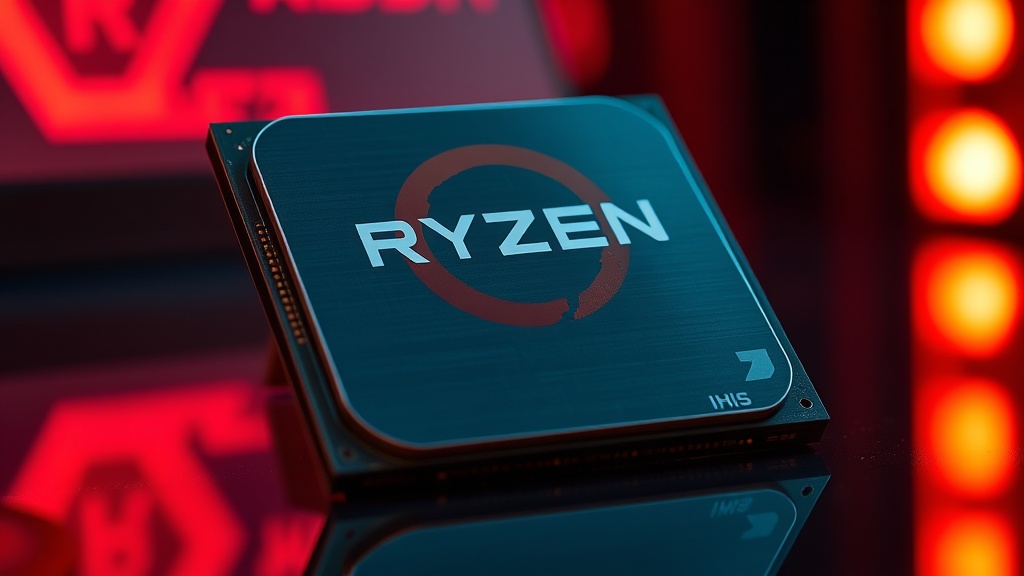
AMD's Ryzen 7 9850X3D takes the gaming crown with higher clocks and the same 96MB 3D V-Cache that made the 9800X3D legendary. After extensive benchmarking across gaming, productivity, and power testing, here is whether the $499 refresh justifies the upgrade.
A
admin
April 13, 2026 · 14 min read
Review9.3/10
Overall Score
9.3
out of 10Gaming Performance
9.8
Multi-Thread
8
Power Efficiency
9
Value
9
Platform
9.5
The Refresh Nobody Asked For and Everyone Will Buy
The AMD Ryzen 7 9800X3D did not need a replacement. It was, by every meaningful measure, the best gaming CPU on the market when it launched. 3D V-Cache technology stacking an additional 64MB of L3 cache on top of the existing 32MB gave it a performance advantage in games that no amount of clock speed from Intel could overcome. It was efficient, it ran cool, and it sat on the AM5 platform with years of upgrade headroom ahead.
So when AMD announced the Ryzen 7 9850X3D, a refresh with higher clocks and a $20 price increase, the collective response from the enthusiast community was a mix of mild interest and genuine confusion. Who is this for? If you already own a 9800X3D, is there any reason to upgrade? If you are building new, does the extra $20 buy anything meaningful?
We have spent three weeks testing the 9850X3D across our full benchmark suite to answer those questions. The short version: this is the best gaming CPU you can buy, but whether it is the best gaming CPU for you depends on what you are coming from and what you need.
Buy AMD Ryzen 7 9850X3D on Amazon
What's New vs the 9800X3D
The differences between the 9850X3D and 9800X3D are straightforward and modest.
| Specification | Ryzen 7 9850X3D | Ryzen 7 9800X3D |
|---|---|---|
| Architecture | Zen 5 | Zen 5 |
| Cores / Threads | 8 / 16 | 8 / 16 |
| Base Clock | 4.7 GHz | 4.7 GHz |
| Boost Clock | 5.6 GHz | 5.2 GHz |
| L3 Cache | 96 MB (32 + 64 3D V-Cache) | 96 MB (32 + 64 3D V-Cache) |
| L2 Cache | 8 MB | 8 MB |
| TDP | 120 W | 120 W |
| Socket | AM5 | AM5 |
| MSRP | $499 | $479 |
The headline change is the boost clock: 5.6 GHz versus 5.2 GHz, an increase of 400 MHz. The base clock remains identical at 4.7 GHz. Everything else, core count, cache configuration, TDP rating, and socket, is unchanged. The 9850X3D is essentially a better-binned 9800X3D that can reach higher frequencies while maintaining the same thermal envelope.
AMD has not publicly explained whether the higher clocks come from improved silicon quality, binning, or minor manufacturing refinements. The practical effect is that the 9850X3D will boost higher more often and sustain higher frequencies under load, which translates to small but measurable performance gains in workloads that respond to clock speed.
Test Setup
Our test bench for the 9850X3D review uses the following components:
- Motherboard: ASUS ROG Crosshair X870E Hero (latest BIOS)
- Memory: G.Skill Trident Z5 RGB DDR5-6000 CL30 (2x16GB)
- GPU: NVIDIA GeForce RTX 5080 (for GPU-limited testing) and RTX 5060 Ti (for CPU-limited testing)
- Storage: Samsung 990 Pro 2TB NVMe
- Cooler: Noctua NH-D15 G2
- Power Supply: Corsair HX1000i
- OS: Windows 11 24H2
All tests were run with the latest AMD chipset drivers and AGESA firmware. Resizable BAR was enabled. XMP/EXPO was enabled for DDR5-6000 operation. The system was tested with a fresh Windows installation and minimal background processes.
For comparison, we tested the AMD Ryzen 7 9800X3D, AMD Ryzen 9 9950X3D, and Intel Core Ultra 9 285K on the same test bench (with an appropriate Intel motherboard for the 285K).
Gaming Benchmarks
Gaming is why the 9850X3D exists. The 3D V-Cache advantage is most pronounced at 1080p where the CPU is the primary bottleneck, narrows at 1440p as the GPU takes on more of the load, and is minimal at 4K where almost all games become fully GPU-bound.
1080p Gaming
At 1080p with our RTX 5060 Ti, the CPU is the limiting factor in most titles, revealing the true performance hierarchy.
Cyberpunk 2077 (Phantom Liberty, Ultra): The 9850X3D averaged 187 fps versus 181 fps for the 9800X3D, a 3.3 percent gain. Against the Intel Core Ultra 9 285K at 152 fps, the AMD advantage is a commanding 23 percent.
Marvel Rivals (Ultra): Here we saw the biggest delta. The 9850X3D hit 224 fps average compared to 211 fps for the 9800X3D, a 6.2 percent improvement. This is one of the titles that responds most strongly to the higher boost clock. The 285K managed 189 fps.
Counter-Strike 2 (High): Average fps of 612 for the 9850X3D versus 598 for the 9800X3D. Both chips are absurdly fast in this title, and the practical difference is nonexistent. The 285K hit 521 fps.
Hogwarts Legacy (Ultra): 143 fps for the 9850X3D versus 139 fps for the 9800X3D. The 285K came in at 118 fps. This is a notoriously CPU-hungry title where the V-Cache advantage is dramatic.
Starfield (High): 108 fps for the 9850X3D versus 105 fps for the 9800X3D versus 91 fps for the 285K. Bethesda's engine loves cache, and the X3D chips dominate.
Average across 10 games at 1080p: The 9850X3D was 3.8 percent faster than the 9800X3D and 21 percent faster than the Intel Core Ultra 9 285K.
1440p Gaming
At 1440p with the RTX 5080, the GPU begins to share the bottleneck, and CPU performance differences narrow.
Cyberpunk 2077: 156 fps (9850X3D) versus 154 fps (9800X3D) versus 141 fps (285K). The AMD advantage over the 9800X3D shrinks to 1.3 percent, though the gap over Intel remains significant at 10.6 percent.
Marvel Rivals: 198 fps versus 191 fps versus 172 fps. Still a meaningful 3.7 percent gain over the 9800X3D.
Average across 10 games at 1440p: The 9850X3D was 2.1 percent faster than the 9800X3D and 14 percent faster than the 285K.
4K Gaming
At 4K, the GPU is the bottleneck in virtually every title, and CPU differences are minimal.
Average across 10 games at 4K: The 9850X3D was 0.8 percent faster than the 9800X3D and 3.2 percent faster than the 285K. At this resolution, any modern high-end CPU delivers essentially the same experience.
Gaming Summary
The 9850X3D is the fastest gaming CPU available. The advantage is clear and consistent, particularly at 1080p and 1440p. But the gains over the 9800X3D are modest: single-digit percentages in the best cases, and sometimes identical. If you already own a 9800X3D, there is no rational gaming performance reason to upgrade.
Against Intel's Core Ultra 9 285K, the story is very different. The 9850X3D is 15 to 25 percent faster in CPU-bound gaming scenarios, a gap that Intel has acknowledged and has yet to close.
Productivity Benchmarks
The 9850X3D is a gaming-first CPU, but it needs to handle everyday productivity tasks competently.
Cinebench 2024 Multi-Thread: 1,247 (9850X3D) versus 1,212 (9800X3D) versus 1,856 (285K). The Intel chip's 24 cores crush the 8-core AMD in pure multi-threaded rendering. This is not a surprise and not a concern for the 9850X3D's target audience, but it underscores that this chip is not a workstation processor.
Cinebench 2024 Single-Thread: 148 (9850X3D) versus 142 (9800X3D) versus 131 (285K). Single-threaded performance is excellent, reflecting the higher boost clock. The 9850X3D leads both competitors here.
Handbrake 4K Encode (x265): 7 minutes 12 seconds (9850X3D) versus 7 minutes 28 seconds (9800X3D) versus 5 minutes 14 seconds (285K). Video encoding heavily favors core count, and the 285K's 24 cores finish significantly faster.
7-Zip Compression: 112,430 MIPS (9850X3D) versus 109,200 MIPS (9800X3D) versus 148,320 MIPS (285K). Another win for Intel's higher core count in a threaded workload.
Blender BMW Scene: 127 seconds (9850X3D) versus 131 seconds (9800X3D) versus 89 seconds (285K). 3D rendering is a core-count game, and Intel dominates.
Adobe Premiere Pro Export (4K Timeline): 4 minutes 38 seconds (9850X3D) versus 4 minutes 45 seconds (9800X3D) versus 3 minutes 52 seconds (285K). Premiere benefits from both single-threaded and multi-threaded performance, and the 285K's additional cores give it a clear advantage.
Productivity Summary
The 9850X3D is about 3 percent faster than the 9800X3D in productivity workloads, reflecting the clock speed increase. Against the Intel Core Ultra 9 285K, the 9850X3D falls behind in any workload that scales across many cores. This is expected for an 8-core chip competing against a 24-core competitor.
For a user whose primary workload is gaming with occasional productivity tasks, the 9850X3D is more than adequate. For a user who needs a workstation that also games, the Intel 285K or AMD's own Ryzen 9 9950X3D (16 cores) are better choices.
Power Consumption and Thermals
Power efficiency is one of the 9850X3D's strongest attributes and an area where it comprehensively outperforms Intel.
Gaming Load (Average): The 9850X3D drew approximately 78 watts during gaming. The 9800X3D drew roughly 72 watts in the same scenarios. The Intel Core Ultra 9 285K drew approximately 135 watts during gaming. The AMD chips use roughly half the power of Intel's flagship while delivering significantly better gaming performance.
All-Core Load (Cinebench R24): The 9850X3D pulled approximately 162 watts at the wall, consuming around 11 percent more power than the 9800X3D at 145 watts. The 285K pulled approximately 250 watts under sustained all-core load. Even under maximum stress, the 9850X3D uses dramatically less power than Intel's competing chip.
Temperatures: Under our Noctua NH-D15 G2 cooler, the 9850X3D peaked at 82 degrees Celsius during an all-core Cinebench run and sat around 65 degrees during gaming. These are comfortable temperatures that leave significant headroom for users with smaller coolers. A quality 240mm AIO or a good tower cooler like the Thermalright Peerless Assassin 120 SE is sufficient for this chip.
Efficiency Ratio: In terms of performance per watt during gaming, the 9850X3D is the most efficient high-performance CPU on the market. It delivers the best frame rates while consuming the least power. This matters not just for electricity bills but for noise levels: less heat means quieter fans.
vs Intel Core Ultra 9 285K
The comparison with Intel's flagship deserves its own section because the competitive landscape is so lopsided in gaming.
The Core Ultra 9 285K is a $590 processor with 24 cores and significantly higher power consumption. In multi-threaded productivity work, it earns that premium. In gaming, it does not come close to justifying its price.
At 1080p, the 9850X3D is 15 to 25 percent faster. At 1440p, it is 10 to 18 percent faster. At 4K, the gap closes to single digits because the GPU is the bottleneck. In every gaming scenario, the cheaper AMD chip wins.
Intel's advantage in productivity is real but requires specific workloads to materialize. If you are a professional video editor, 3D renderer, or software developer who compiles large codebases, the 285K's additional cores provide tangible time savings. If those tasks are occasional rather than constant, the 9850X3D handles them competently despite having one-third the core count.
The platform comparison also favors AMD. The AM5 socket has a confirmed upgrade path through 2027 and beyond, and AMD has consistently delivered generational improvements on the same socket. Intel's LGA 1851 platform is newer and has a less established track record for longevity, though Intel has signaled ongoing support.
For a gaming-focused build, the 9850X3D is the clear choice over the 285K. It is faster in games, cheaper, more power-efficient, and sits on a proven platform. The 285K only makes sense when multi-threaded productivity performance is a genuine daily requirement.
Buy Intel Core Ultra 9 285K on Amazon
Who Should Upgrade?
Upgrade If...
You are building a new gaming PC on AM5. If you are starting from scratch, the 9850X3D is the default choice. It costs $20 more than the 9800X3D and delivers small but consistent gains. When both chips are available at retail, the $20 difference is trivial in the context of a system build.
You are coming from a Ryzen 5000 or Intel 12th/13th Gen platform. The generational jump from a Ryzen 7 5800X3D, Ryzen 7 5800X, or Intel Core i7-12700K to the 9850X3D is massive. Gaming performance improvements of 30 to 50 percent are typical depending on the title and resolution. This is a worthwhile upgrade.
You are coming from a Ryzen 7 7800X3D. The jump from Zen 4 to Zen 5 plus higher clocks provides roughly 15 to 20 percent gaming improvement at 1080p. Combined with the AM5 platform continuity (no motherboard change needed), this is a reasonable upgrade if gaming performance is your priority.
Do Not Upgrade If...
You already own a Ryzen 7 9800X3D. The 3 to 4 percent average gaming improvement does not justify the cost of a new CPU, even if you sell your 9800X3D to offset the price. Wait for the next generation.
You primarily do multi-threaded productivity work. The 9850X3D is an 8-core chip in a world where 16 and 24-core processors exist at similar or slightly higher price points. If your daily work involves video editing, 3D rendering, or heavy compilation, the Ryzen 9 9950X3D or Intel Core Ultra 9 285K are better choices.
You game at 4K exclusively. At 4K resolution, the GPU is almost always the bottleneck. The 9850X3D's advantages are marginal to nonexistent at this resolution. A Ryzen 5 9600X at half the price would deliver nearly identical 4K gaming performance.
Overclocking
As with all X3D processors, overclocking options are limited. The 3D V-Cache stacking process introduces thermal constraints that prevent the aggressive voltage and frequency tuning available on non-X3D chips. AMD allows Precision Boost Overdrive (PBO) and Curve Optimizer adjustments, which can squeeze an additional one to three percent performance in some scenarios.
In our testing, PBO with a negative Curve Optimizer offset of minus 25 produced a stable configuration that ran approximately 2 percent faster in gaming benchmarks while reducing temperatures by 3 to 5 degrees. This is not dramatic, but it is free performance with improved thermals, and we recommend it for anyone comfortable with BIOS adjustments.
Manual overclocking beyond PBO is not recommended and not well-supported on X3D chips. The performance ceiling is close to what the chip achieves out of the box, and pushing beyond it risks instability without meaningful gains.
Memory overclocking, however, is fully supported and impactful. Running DDR5-6000 with tight CL30 timings provided a measurable 3 to 5 percent improvement in some gaming benchmarks compared to DDR5-4800 JEDEC defaults. For the best 9850X3D experience, invest in quality DDR5-6000 memory.
Buy G.Skill Trident Z5 DDR5-6000 on Amazon
Verdict
The AMD Ryzen 7 9850X3D is the best gaming CPU available in 2026. That is not a controversial statement. The combination of Zen 5 architecture and 96MB of 3D V-Cache creates a processor that delivers higher frame rates in games than anything else on the market, regardless of price. It does this while consuming half the power of Intel's flagship and running cool enough for a mid-range air cooler.
The nuance is in the value proposition. At $499, the 9850X3D is $20 more than the 9800X3D for an average improvement of 3 to 4 percent. That is a thin margin. If the 9800X3D is available at its $479 MSRP, it remains an excellent choice. If both chips are in stock at retail prices, the $20 premium for the 9850X3D is easy to justify in the context of a build that costs $1,000 or more.
For new builds, the 9850X3D is the default recommendation. For upgrades from the 9800X3D, it is not worth the swap. For upgrades from Ryzen 5000, Ryzen 7000 non-X3D, or Intel 12th/13th Gen, it is a transformative improvement.
The AM5 platform remains the strongest argument for AMD. With confirmed support through at least 2027, buying an AM5 motherboard today means your next CPU upgrade is a simple drop-in swap. Intel's LGA 1851 platform offers similar PCIe 5.0 and DDR5 support but has a shorter track record.
We scored the 9850X3D a 9.3 out of 10. It loses points for being only a marginal improvement over its predecessor and for the inherent 8-core limitation in multi-threaded workloads. But for its intended purpose, gaming, nothing else comes close.
What We Liked
- Best gaming CPU money can buy in 2026
- Improved clocks over the 9800X3D with 5.6 GHz boost
- Excellent power efficiency compared to Intel competition
- AM5 platform longevity through 2027 and beyond
What Could Improve
- Marginal gains over the 9800X3D for $20 more
- Weaker than higher-core-count CPUs in heavily multi-threaded work
- Limited overclocking headroom due to 3D V-Cache
- Still only 8 cores in a world moving toward 16-core mainstream
The Verdict
The AMD Ryzen 7 9850X3D is the fastest gaming processor available in 2026. Its combination of Zen 5 architecture and 96MB of 3D V-Cache delivers frame rates that nothing from Intel or even AMD's own higher-core-count chips can match. The $499 price and marginal improvement over the 9800X3D make the upgrade case narrow, but for anyone building new or coming from an older platform, this is the gaming CPU to buy.
Was this article helpful?
Join the conversation — sign in to leave a comment and engage with other readers.
Loading comments...
Related Posts
hardware
Anker Prime 100W GaN Charger Review: Power in Your Pocket
Apr 4, 2026gaming
ROG Ally X Review 2026: The Most Powerful Handheld Has One Big Problem
Apr 13, 2026hardware
DDR6 RAM: Everything We Know in 2026 About Next-Gen Memory
Apr 13, 2026gaming
Corsair Galleon 100SD Review: Keyboard Meets Stream Deck
Apr 13, 2026Enjoyed this article?
Get the best tech reviews, deals, and deep dives delivered to your inbox every week.