The Scorecard
Who wins each round.
6 dimensions · Independently tested
Swipe sideways to compare
Spec Sheet · Printed
The full numbers, side by side.
Source · Manufacturer specs + our testing
The AI Assistant War Has a New Battlefield
Smart assistants in 2026 are not the same devices that used to fumble through basic timer requests and butcher your music playlists. Both Amazon and Google have rebuilt their voice assistants from the ground up around large language models, and the result is a generational leap in what these speakers and displays can actually do. Amazon launched Alexa+ (Alexa Plus) with agentic AI capabilities and made it free for all Prime members in February 2026. Google has been rolling out Gemini-powered intelligence across its entire Nest and Google Home lineup, cutting smart home latency by 40 percent and adding real-time camera intelligence.
We set up both ecosystems in the same household and used them daily for four weeks. We tested smart home control across lights, locks, thermostats, and cameras. We pushed conversational AI with follow-up questions, complex requests, and multi-step tasks. We evaluated privacy controls, app experiences, and what each platform actually costs once you factor in hardware and subscriptions.
This is not a spec-sheet comparison. This is a report on what it feels like to live with each assistant as your primary smart home brain in 2026.
AI Capabilities: Conversation and Intelligence
Amazon Alexa+
The biggest upgrade in Alexa+ is conversational fluency. Previous versions of Alexa were rigid command-response systems. You spoke a specific phrase, Alexa executed a specific action, and any deviation from the expected syntax resulted in confusion. Alexa+ changes this fundamentally.
In our testing, we could speak to Alexa+ the way you would speak to another person. Saying "it is getting kind of dark in here" would trigger Alexa+ to turn on the living room lights without needing the explicit "Alexa, turn on the living room lights" command. Asking "what should I make for dinner with chicken and rice?" produced genuinely useful recipe suggestions with step-by-step instructions, and Alexa+ could then add missing ingredients to your Amazon shopping cart without being asked.
The agentic capabilities are where Alexa+ truly separates itself. Through integrations with Uber, OpenTable, Ticketmaster, Expedia, Thumbtack, and others, Alexa+ can execute multi-step tasks. We asked it to "book a table for two at a good Italian restaurant near me on Friday at 7" and it searched OpenTable, presented three options on the Echo Show display, and completed the reservation after we confirmed our choice. This kind of task chaining simply did not exist in consumer voice assistants before 2026.
Where Alexa+ stumbles is in deep knowledge queries. Ask it to explain a complex topic and the responses are competent but noticeably less detailed than what Google provides. Amazon has optimized Alexa+ for action over information, and it shows.
Google Home AI with Gemini
Google's approach is different. Rather than building an agentic task-completion machine, Google has focused on making Gemini the smartest conversational partner in any room. The Gemini integration across Google Home and Nest devices means your smart speaker now has access to the same AI model powering Google's most advanced products.
In practice, this means Google Home AI provides substantially better answers to knowledge-based questions. When we asked both assistants to explain how heat pumps work and whether one would be a good fit for our climate zone, Google's response was detailed, personalized using our home address for climate data, and genuinely educational. Alexa+ gave a competent but generic overview.
Google has also cut smart home command latency by up to 40 percent for common actions like turning on lights. In our testing, the difference was noticeable. Saying "turn on the kitchen lights" on a Nest speaker produced results that felt nearly instantaneous, while Alexa+ had a fraction of a second more delay.
The standout Google feature is Nest Cam integration. With a Google Home Premium subscription, you can ask Gemini questions about your camera feeds in real time. "Is anyone at the front door?" produces an actual AI-interpreted answer based on the live camera feed rather than just triggering a notification. During our testing, this felt genuinely futuristic and practically useful.
Gemini Live is also now available on Nest speakers, enabling extended back-and-forth conversations that feel more like talking to a knowledgeable friend than issuing commands to a computer.
Smart Home Control
This is where Amazon maintains its most significant advantage, and it is not close.
Device Compatibility
Amazon claims compatibility with over 300,000 smart home devices. Google Home supports roughly 80,000. In practical terms, this means virtually every smart home product you buy will work with Alexa out of the box. Google Home covers most popular brands but occasionally leaves gaps with lesser-known or older devices.
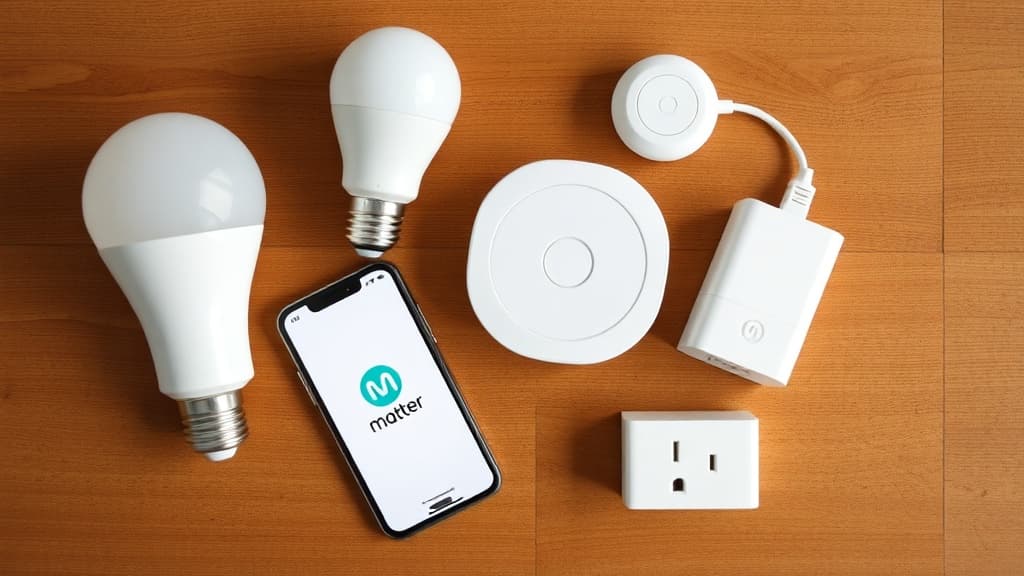
Both platforms now support Matter, the universal smart home protocol that was supposed to level the playing field. Matter has helped, but Amazon's head start with Zigbee and Z-Wave support through Echo devices with built-in hubs still gives it broader reach, especially for users with older smart home gear.
Routine and Automation Quality
Alexa+ has significantly improved its routine capabilities. You can now describe routines in natural language rather than building them step by step in the app. Saying "every weekday morning, turn on the kitchen lights at 6, start the coffee maker, and play my news briefing at 6:15" creates the routine automatically. In our testing, this worked reliably about 85 percent of the time, with the occasional need to manually adjust timing in the app.
Google Home automations have also improved, and the Gemini-powered natural language processing means you can create and modify automations through voice. The Google Home app provides a cleaner interface for managing automations, and the ability to use device state as triggers (not just time or voice) gives Google an edge in complex conditional logic.
Response Reliability
Over four weeks, we tracked smart home command success rates. Alexa+ successfully executed commands 94 percent of the time. Google Home AI hit 91 percent. The failures were mostly edge cases involving multi-room audio routing and scenes with more than eight devices. Both platforms have reached a level of reliability where smart home control genuinely feels dependable rather than frustrating.
Voice Quality and Understanding
Wake Word and Recognition
Alexa+ retains the "Alexa" wake word, and Amazon has improved far-field recognition. In our kitchen testing with running water and a range hood on medium, Alexa+ on the Echo (5th Gen) understood commands from 15 feet away roughly 88 percent of the time. Google Home on a Nest Audio managed 82 percent under the same conditions.
Both assistants handle multiple voices well. Alexa+ uses voice profiles to personalize responses per family member, and Google's voice match serves a similar function. Neither had significant issues distinguishing between household members during our testing.
Natural Language Processing
This is where the generational AI upgrade is most apparent. Both assistants now handle pronouns, follow-up questions, and contextual references far better than their 2024 predecessors. You can say "turn on the lights" followed by "make them dimmer" followed by "actually, just the ones in the corner" and both platforms track the conversation thread.
Google edges ahead in understanding ambiguous requests. When we said "I am cold," Google Home suggested adjusting the thermostat and offered to raise the temperature by two degrees. Alexa+ asked us to be more specific. Small difference, but it adds up in daily use.
Ecosystem Integration
Amazon Alexa+
Alexa+ is deeply embedded in Amazon's commerce ecosystem. This is both its greatest strength and its most polarizing quality. The shopping integration is seamless. You can reorder household items, check delivery status, and discover deals entirely through voice. If you are an Amazon household, this alone might justify choosing Alexa+.
The entertainment ecosystem is also strong. Alexa+ integrates with Amazon Music, Audible, Prime Video, and Fire TV. Cross-device handoff between Echo speakers and Fire TV sticks works well, and multi-room audio across Echo devices is mature and reliable.
Alexa+ also supports the broadest range of third-party skills, though the skill ecosystem has always been a mixed bag of quality. The best skills are excellent, but many feel abandoned.
Check Amazon Alexa+ devices on Amazon
Google Home AI
Google's ecosystem advantage is information and services. Integration with Google Calendar, Gmail, Google Maps, and YouTube is unmatched. Asking your Nest Hub "what is my schedule today?" pulls calendar events, commute times based on live traffic, and relevant reminders into a single, well-organized response.
Google Photos integration means your Nest Hub displays function as genuinely useful digital photo frames that surface relevant memories. YouTube Music and YouTube work natively, and casting from any Android device to any Nest speaker or display is effortless.
The weakness is that Google's ecosystem feels less action-oriented than Amazon's. You get great information but fewer one-step transactions. There is no equivalent to Alexa+'s integrated shopping experience, and third-party integrations for task completion lag behind Amazon's partnerships with Uber, OpenTable, and others.
Check Google Nest devices on Amazon
Privacy and Data Handling
Privacy has become a decisive factor for many smart home buyers, and both companies have made meaningful improvements.
Amazon Alexa+
Amazon now provides a privacy dashboard that shows exactly what data Alexa has collected and allows deletion by time period or category. You can opt out of having voice recordings used for AI model improvement. Alexa+ processes more queries on-device than previous versions, reducing the amount of data sent to the cloud.
However, the deep shopping integration means Alexa+ inherently collects and utilizes purchase behavior data. If you are uncomfortable with Amazon knowing your shopping habits in granular detail, this is worth considering.
Google Home AI
Google has been more aggressive about on-device processing. Many smart home commands now execute locally on Nest devices without reaching Google's servers, and the company has been transparent about which features require cloud processing.
Google also offers a comprehensive privacy dashboard through the Google Home app, and the ability to automatically delete stored activity after three or eighteen months provides a reasonable balance between functionality and privacy.
Neither platform is perfect on privacy. Both companies use aggregated data to improve their services, and both require cloud processing for their most advanced AI features. But both have reached a point where privacy controls are granular enough for most users to find a comfortable setting.
Pricing: What Each Platform Actually Costs
Amazon Alexa+
For Amazon Prime members, Alexa+ is included at no additional cost. Given that most U.S. households already have Prime, this effectively makes Alexa+ free for the majority of potential users. For non-Prime members, Alexa+ costs $19.99 per month, which is steep for an assistant alone but makes sense if you bundle it with Prime's other benefits.
The hardware side varies. The Echo Dot (5th Gen) starts at around $50, the standard Echo at $100, and the Echo Show line ranges from $90 to $250. Entry cost for a basic Alexa+ setup is very low.
Google Home AI
The base Gemini experience on Google Home and Nest devices is completely free. No subscription is required for smart home control, voice assistance, or basic Gemini conversations. This is a meaningful advantage for budget-conscious buyers.
However, advanced features like real-time Nest Cam AI queries and extended Gemini Live conversations require a Google Home Premium subscription, which is bundled with Nest Aware at $12.99 per month for camera recording and AI features.
Google's hardware starts at similar price points. The Nest Mini is around $50, and the Nest Hub (2nd Gen) runs about $100. The Nest Hub Max at $230 and Nest Audio at $100 round out the lineup.
For households that want the full feature set without subscriptions, Google's free base tier is the better deal. For Prime members who already pay for the membership, Alexa+ is effectively free and more capable.
Which Smart Assistant Should You Choose?
Choose Amazon Alexa+ If:
You are already an Amazon Prime member. The integration with Amazon's shopping ecosystem, combined with the broadest smart home device compatibility and genuinely impressive agentic capabilities, makes Alexa+ the more capable assistant for most households. The ability to book reservations, order rides, and manage complex routines through natural conversation is a real competitive advantage.
Alexa+ is particularly strong for smart home enthusiasts with large device collections. If you have dozens of smart devices across multiple brands and protocols, Alexa+'s compatibility breadth is unmatched.
Choose Google Home AI If:
You prioritize intelligence over action. Google's Gemini-powered responses are consistently more informative, more contextual, and more nuanced than what Alexa+ delivers. If you use your smart assistant primarily for information, calendar management, and integration with Google services, Google Home AI is the smarter choice.
Google Home AI is also the better pick for budget-conscious buyers. The free tier is genuinely comprehensive, and the hardware is competitively priced. Families with kids will appreciate the new supervised account support for safe interactions.
If you have Nest cameras, the Gemini-powered camera intelligence is a killer feature that Amazon cannot match.
The Verdict
Both assistants have made extraordinary leaps in 2026. The gap between Alexa and Google Assistant that existed for years has narrowed considerably now that both platforms run on genuine large language models.
Amazon Alexa+ wins this comparison by a narrow margin. Its broader device compatibility, agentic task completion, and seamless integration with the world's largest e-commerce platform give it a practical edge in more households. The fact that it is free for Prime members eliminates the cost barrier for most potential buyers.
Google Home AI is the smarter assistant in terms of raw conversational intelligence and information quality. It is also the better value for non-Prime households and offers superior camera integration for Nest users.
The honest answer is that both platforms are now good enough that your choice should be driven by ecosystem. If you are an Amazon household with Fire TV, Ring cameras, and a Prime membership, Alexa+ is the obvious choice. If you live in Google's world with Pixel phones, Nest cameras, and YouTube TV, Google Home AI will serve you better.
The days of one assistant being clearly superior are over. In 2026, the best smart assistant is the one that speaks the language of your existing tech ecosystem.
Real-World Scenarios
Which one should you buy?
Pick the one that sounds like you
For Prime members with big smart-home setups
Alexa+ is free with Prime, supports 300,000+ devices, and can book Uber, OpenTable, and Ticketmaster through voice alone. If you already have a mixed Zigbee and Z-Wave collection, nothing else comes close.
Go with →Amazon Alexa+
For information seekers and Google-household users
Gemini produces consistently more detailed, contextual answers. Calendar, Gmail, Maps, and YouTube integration is unmatched — and the free tier actually covers what most people need.
Go with →Google Home AI (Gemini)
For Nest camera owners
Gemini-powered real-time camera queries ('is anyone at the front door?') are a genuinely futuristic feature Amazon cannot match.
Go with →Google Home AI (Gemini)
For fastest smart-home response
Google's 40% latency cut makes lights and thermostat commands feel nearly instant on Nest speakers.
Go with →Google Home AI (Gemini)
The Final WordOur Verdict
Our pick: Amazon Alexa+
Winner · 8.5
Amazon Alexa+
Both assistants have made extraordinary leaps in 2026 — the gap that existed for years has narrowed considerably now that both run on real large language models. Google's Gemini is the smarter conversationalist and the better information tool, and for Nest households the camera intelligence is a killer feature. But Alexa+ wins by a narrow margin for most households. Broader device compatibility, working agentic task completion through Uber and OpenTable, and the fact that it's free for Prime members give it a practical edge. Pick Google if you live in the Pixel-and-Nest ecosystem; otherwise Alexa+ is the more capable daily driver.
Best Budget · 8.0
Google Home AI (Gemini)
*Gemini's intelligence, now living in your kitchen speaker.*
Did this comparison help you decide?
Join the conversation — sign in to leave a comment and engage with other readers.
Loading comments...
More head-to-heads
All comparisons →Smart Home